
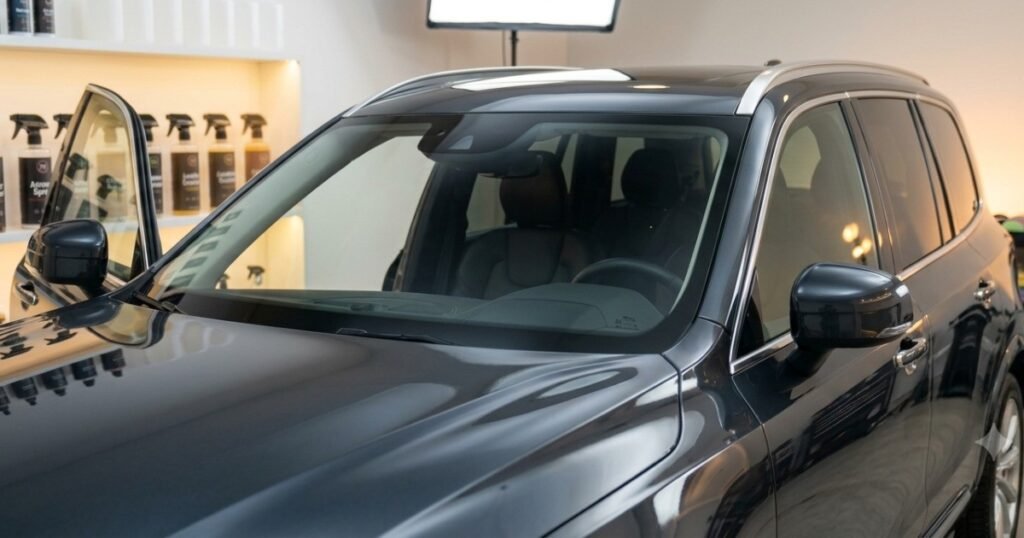
The best way to clean car windows without leaving streaks is all about using the right techniques and professional tools. Having a spotless, crystal-clear windshield isn’t just about making your ride look sharp—it’s a critical safety measure. Blind spots caused by road grime, greasy fingerprints, and morning glare can easily lead to accidents. Yet, many car owners struggle with those frustrating, hazy lines left behind after cleaning.
If you want a flawless, showroom-quality finish, you need to ditch the old newspaper-and-windex method. In this guide, we’ll break down the best way to clean car windows without leaving a single streak behind.
Why Do Inside Car Windows Get So Hazy and Greasy?
Before we look at the cleaning process, we need to understand what we are fighting against. The inside of your car glass suffers from a very specific type of contamination that is completely different from the outside dirt.
If you have ever noticed a stubborn, oily film on your interior windshield that seems to smear whenever you touch it, you are experiencing vinyl off-gassing. When your car sits in the sun, the plastic, vinyl, and synthetic materials used in your dashboard release chemical vapors. Over time, these oily gases rise and stick directly to your cold glass, creating a hazy film.
Additionally, every time you use dashboard shining sprays, microscopic particles of oil get into the air and settle on your glass. Add some dust, smoke residue, and fingerprint oils into the mix, and you get a sticky layer that standard cleaning methods can’t easily remove. Knowing the best way to clean car windows means understanding how to break down this chemical film before you even start polishing.
1. Gather the Right Tools (The Prep Work)
Before you spray anything, you need the right arsenal. Using cheap household chemicals or rough cloths on automotive glass is one of the quickest ways to ruin your windows and your car’s delicate interior.
- Ammonia-Free Glass Cleaner: Never use standard home glass cleaners (like original blue Windex) on your car. Ammonia can dry out and crack your rubber window seals. More importantly, if your car has aftermarket window tint, ammonia will chemically react with the film, causing it to peel, bubble, and turn purple. Professional detailers always recommend using dedicated, tint-safe products to protect your delicate automotive glass.
- Waffle-Weave Microfiber Towels: Standard cotton rags or paper towels leave behind lint particles and dust. Waffle-weave microfiber towels are specifically designed for glass because their unique pocketed texture traps dirt and absorbs liquid without leaving streaks. You will need at least three or four clean towels.
- Isopropyl Rubbing Alcohol: This is the secret weapon used by professional detailers. It is the best way to clean car windows when they are covered in heavy grease or oily off-gassing residue because it strips the oils away instantly.
- Distilled Water: If you are diluting a concentrated glass cleaner, always use distilled water. Tap water contains minerals (like calcium and magnesium) that dry on the glass, leaving behind nasty water spots.
2. Step-by-Step Guide: The Best Way to Clean Car Windows
To achieve a streak-free, professional-grade shine, follow this exact sequence:
Step 1: Work in the Shade
When learning the best way to clean car windows, the environment matters. Never clean your car windows in direct sunlight or when the glass is hot to the touch. The heat will cause your glass cleaner to evaporate almost instantly, leaving behind dried chemical residue (streaks) before you even get a chance to wipe it off.
Step 2: Roll the Windows Down Slightly
One of the most overlooked areas is the very top edge of the window glass that sits inside the rubber seal. Roll your windows down about an inch and clean this dirty edge first with a damp microfiber cloth. If you don’t, that hidden dirt will smear across your clean window the next time you roll it down.
Step 3: Use the Dry Prep Wipe
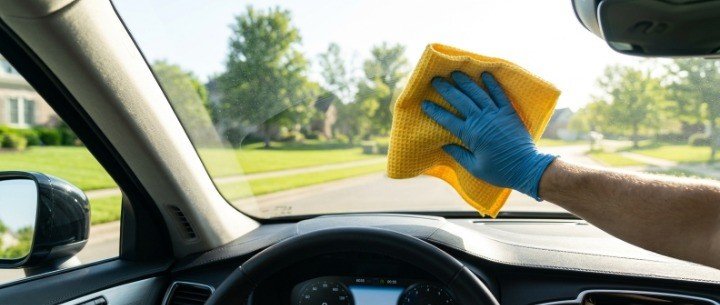
Taking a dry, clean microfiber towel and thoroughly wiping down the glass before using any sprays is actually the best way to clean car windows without making a muddy mess. This dry wipe easily removes the top layer of loose dust and pet hair, preventing your liquid cleaner from simply smearing dry dirt around.
Step 4: Strip the Oils with Rubbing Alcohol
To tackle that annoying interior haze, you need to degrease the surface. Dampen a clean microfiber towel with rubbing alcohol and wipe the glass down. This acts as a deep-cleaning prep stage that breaks down the stubborn vinyl gases and fingerprint oils.
Step 5: Spray the Towel, Not the Glass
Instead of blasting the glass directly with spray, mist your microfiber towel. Spraying your cloth instead of the glass is the best way to clean car windows while protecting your dashboard from harmful overspray door panels, or leather seats, which can be difficult to clean and might cause staining or discoloration.
Step 6: The Two-Towel Technique
This is the ultimate secret of professional detailers:
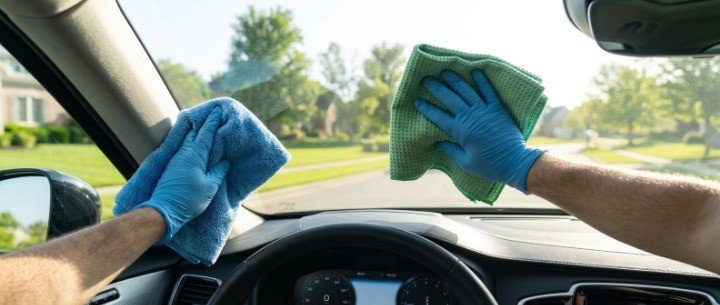
- The Wet Wipe: Use your first microfiber towel (damp with cleaner) to wipe the window. Wipe in a straight, overlapping grid pattern (top to bottom, left to right). Avoid circular motions, as they can trap dirt and create swirl marks. For a deeper understanding of this step, you can also review our quick starting guide on how to clean car windows to make sure your technique is flawless.
- The Dry Buff: Immediately grab your second, completely dry microfiber towel and buff the glass. This removes any leftover moisture and chemical residue before it can dry and form streaks.
3. The Pro-Tip for Pinpointing Streaks
Here’s a legendary detailing hack that makes this the best way to clean car windows with absolute confidence:
- When cleaning the outside of the glass, wipe in horizontal strokes.
- When cleaning the inside of the glass, wipe in vertical strokes.
If you finish and notice a streak, look closely. If the streak is horizontal, it’s on the outside. If it’s vertical, it’s on the inside. This simple trick saves you from guessing which side of the glass needs extra attention.
4. Troubleshooting: How to Deal with Stubborn Contaminants
Sometimes, standard glass cleaner isn’t enough to tackle years of baked-on mineral deposits, tree sap, or road film. If your glass still looks hazy, try these advanced methods:
- Clay Bar Treatment: Just like paint, you can clay bar your glass. Spray a little glass cleaner as a lubricant and gently slide a detailing clay bar across the glass. It will pull out embedded contaminants, leaving the surface smooth as ice and proving to be the best way to clean car windows that have been neglected for months.
- The Reach-and-Clean Tool: The angle where your windshield meets the dashboard is incredibly tight. Using a pivoting reach-and-clean wand with a microfiber pad is the best way to clean car windows in those hard-to-reach corners without straining your back. To keep your tools ready for the next job, make sure you know how to wash microfiber towels properly so they don’t lose their high absorbency.
5. Frequently Asked Questions (FAQs)
Can I use vinegar and water to clean car windows?
Yes! A mixture of 50% distilled water and 50% white vinegar is an excellent, budget-friendly, and chemical-free alternative. Vinegar is naturally acidic, meaning it is highly effective at dissolving stubborn hard water spots and cutting through road grime. However, it does smell strong, so make sure to leave your car doors open for a few minutes after cleaning to let it air out.
Is glass cleaner safe for tinted windows?
Only if the cleaner is labeled as “ammonia-free.” Ammonia is a harsh chemical that dissolves the adhesive backing of aftermarket window tint films. Over time, it will cause the tint to turn a purple-blue color, bubble, and peel away. Always double-check your product bottle before using it on tinted glass, as using safe chemicals is the best way to clean car windows with aftermarket film.
Why does my windshield fog up after cleaning?
Windshields fog up because moisture in the air condenses onto microscopic dirt and oil particles on the glass. If your window still has a thin layer of greasy off-gassing film left behind from a poor wash, moisture will stick to it instantly. Following a thorough two-towel deep-clean is the best way to prevent your glass from fogging up during cold or humid mornings.
How often should I clean the inside of my windshield?
To maintain maximum road visibility, you should aim to clean the inside of your windshield at least once every three to four weeks. If you live in a hot climate where your car dashboard is constantly baking in the sun, you may need to clean it every two weeks to keep up with vinyl off-gassing haze.
Conclusion
Finding the best way to clean car windows doesn’t require expensive machinery or magic formulas. By simply switching to an ammonia-free cleaner, using high-quality waffle-weave microfiber towels, and mastering the two-towel method, you can achieve professional, streak-free clarity every single time.
For more expert car detailing tips and DIY guides, make sure to visit our home page over at AutoGlowHacks. Keep your visibility high, your driving safe, and your ride looking sharp!