
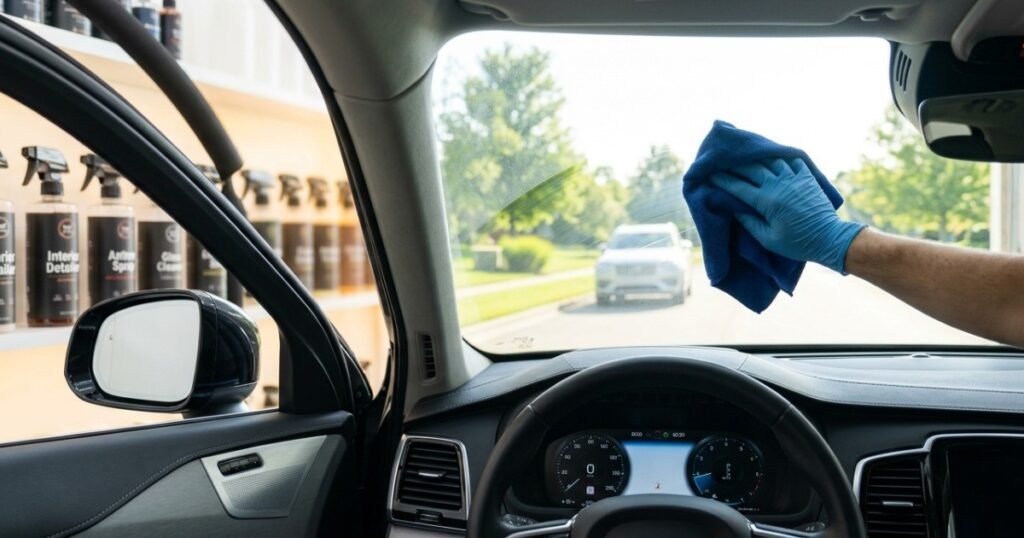
If you want to know how to clean car windows to remove that nasty, cloudy interior haze like a professional detailing expert, you are in the right place. That stubborn, milky film on the inside of your glass is an absolute nightmare during night drives, but fixing it takes very little effort. A quick wipe with standard cleaner won’t cut it, but keep reading for the full step-by-step guide to get crystal-clear results using basic household items.
That frustrating, white fog covering the inside of your glass is actually caused by several everyday factors inside your cabin. Your vehicle’s plastic dashboard and vinyl seats naturally release chemical gases over time, which heat up and stick directly to the cold glass surfaces. When you combine those interior plastic gases with breathing, coughing, air freshener chemicals, and tobacco or vape smoke, you get a thick layer of grime that completely ruins visibility.
The good news is that achieving a completely invisible finish on your auto glass does not require expensive professional equipment. By using the correct scrubbing angles and avoiding common household chemical traps, you can safely eliminate this dangerous driving hazard right from your own driveway.
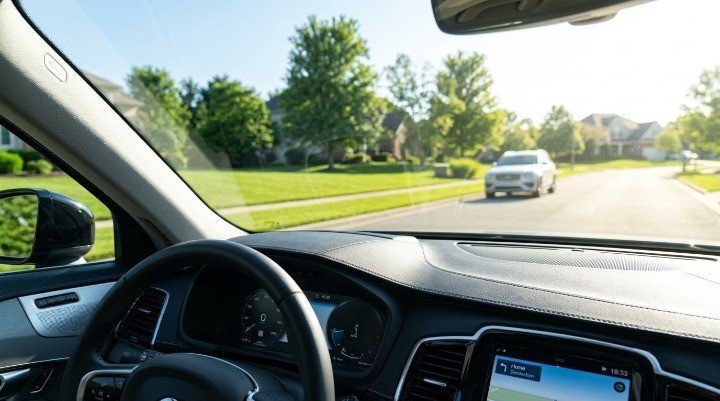
Why Interior Car Glass Traps Grime So Easily
Most drivers regularly spray down the outside of their windshields at gas stations, but the inside surface gets completely ignored for months. Because the interior cabin remains a tightly enclosed space, any airborne residue has nowhere to go except directly onto your windows.This is why mastering how to clean car windows from the inside becomes absolutely essential for safety.
This interior buildup acts like a chemical magnet, trapping dust and fine particles until it forms a thick, blinding film. If you ignore this haze, night driving becomes incredibly dangerous because incoming headlights will cause the entire glass surface to scatter light blindly into your eyes.
Regular glass cleaners often fail on the inside because they simply smear these oily chemical deposits around instead of actually lifting them. To get a true streak-free finish, you must use a dedicated cleaning method that completely breaks down oil bonds without leaving sticky residues behind.
What You Need to Clean Car Windows
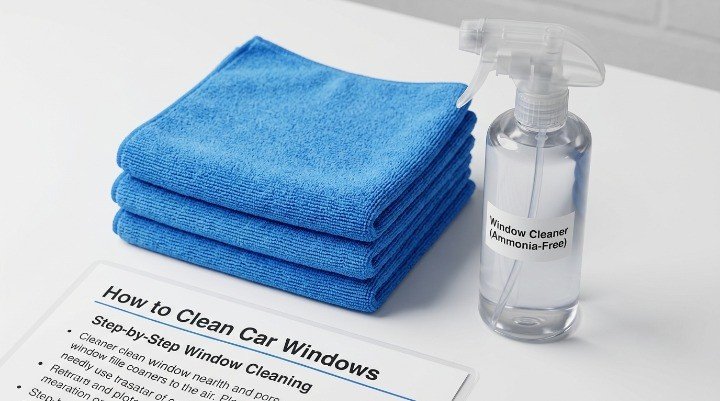
Before diving into the actual process of how to clean car windows, gather these essential detailing supplies to build your own high-performance glass kit:
- Two or Three Brand New Microfiber Cloths: Fresh, unwashed towels are crucial because older towels often carry leftover laundry detergent residues that cause heavy streaking.
- A Non-Ammonia Based Glass Cleaner: Essential for preventing permanent chemical damage to your interior components.
- Rubbing Alcohol (Isopropyl Alcohol): The ultimate cheap tool for instantly cutting through heavy grease, vape film, and stubborn plastic outgassing residues.
- White Vinegar: A fantastic natural acid cleaner that effortlessly dissolves hard water spots and mineral deposits.
- A Plastic Spray Bottle: To mix and apply your custom DIY solutions evenly without oversaturating the cabin.
- Optional Reach Wand: A specialized microfiber window cleaning wand to help clean the far bottom corners of the glass if you have trouble reaching them.
The Step-by-Step Window Detailing Process
Step 1: Perform a Dry Microfiber Wipe Down The absolute secret of how to clean car windows without making a giant, blurry mess is starting with a completely dry microfiber cloth. Take your first clean towel, fold it into quarters, and wipe down the entire inside surface using tight, overlapping vertical patterns. This dry friction lifts the top layer of dusty car grime and prevents your wet liquid solutions from turning into a thick, messy smear later.
Step 2: Make Your Chosen Cleaning Solution You do not need an expensive commercial spray to get perfect results on your glass. Knowing how to clean car windows with a custom DIY mix will save you tons of cash. To create a highly effective DIY formula, mix a 1:1 ratio of rubbing alcohol and distilled water inside your clean spray bottle. If you are dealing with heavy water stains rather than oily smoke residue, mix a 1:1 ratio of white vinegar and warm water instead.
Pro Tip Never spray your cleaning liquid directly onto the car windows. The airborne mist will drift onto your dashboard, steering wheel, and leather trim, leaving permanent chemical spots on your delicate interior plastics. Always spray your solution directly onto your microfiber cloth outside the vehicle first.
Step 3: The Mechanical Scrubbing Method When learning how to clean car windows effectively, the physical motion of your hand matters. Take your damp microfiber towel and press it firmly against the top corner of the inside glass surface. Move the towel in tight, consistent circular motions, working your way slowly from the top of the window straight down to the bottom base. This circular movement ensures that the cleaning agents physically detach the stubborn chemical film from the glass pores.
My Personal Hack If you are struggling to reach the absolute lowest edge of the front windshield where it meets the plastic dashboard, flip your hand upside down so the back of your hand faces the glass. This simple structural body adjustment gives you an extra three inches of natural reach into the tightest corners without needing an expensive plastic extension tool.
Step 4: The Final Dry Polish Immediately after scrubbing a section with your damp towel, grab your second completely dry microfiber cloth for the final buff. Wipe the remaining moisture away using long, straight horizontal strokes from left to right. By using circular strokes for the wet phase and straight horizontal strokes for the dry phase, you can instantly see exactly which side of the glass a stray streak is hiding on. This simple cross-hatch direction trick is the ultimate secret of how to clean car windows like a professional detailer.
Important Warning NEVER use household Magic Erasers or ammonia-based cleaners on your vehicle’s glass if you have aftermarket window tint installed. Magic erasers are made of abrasive melamine foam that will permanently scratch the tint film, while ammonia will chemically dissolve the protective tint adhesives, causing the film to bubble and peel away within days.
How Often Should You Clean Vehicle Glass?
To maintain pristine visibility and safety, your schedule for how to clean car windows should be split into regular maintenance and deep cleans. Aim to execute a dry microfiber wipe down once every week to catch fresh dust. A thorough deep clean using your rubbing alcohol or vinegar mixture should be performed every three to six months to prevent seasonal chemical outgassing from building a permanent layer. If you or your frequent passengers smoke or vape inside the vehicle, you will need to perform a full wet deep clean every two to three weeks to prevent a blinding yellow haze from returning.
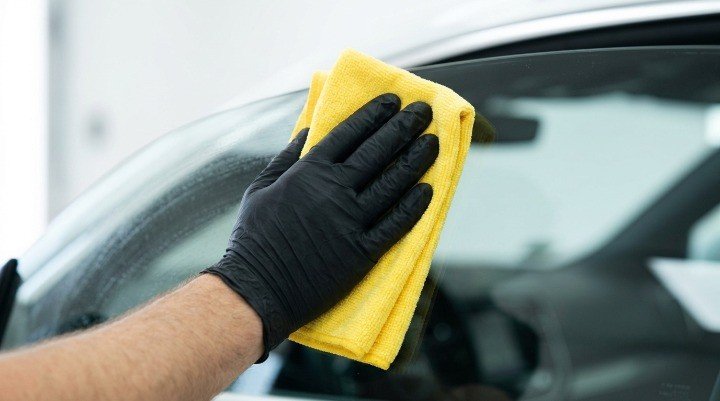
Tips to Keep Your Auto Glass Clear for Longer
Once you master how to clean car windows, keeping them crystal clear is easy if you build a few simple detailing habits:
- Crack your side windows open slightly when parking in extreme summer heat to let interior plastic outgassing escape instead of trapping it on the glass.
- Avoid using cheap, oil-based dashboard protectants and gloss sprays, as these chemicals evaporate rapidly and coat your glass in a greasy film.
- Switch your car’s climate control system from “recirculate” mode to “fresh air” mode during long road trips to reduce the buildup of moisture and respiratory oils inside the cabin.
- Store a dedicated, clean microfiber cloth inside your glovebox so you can safely blot away sudden morning condensation without using your bare hands.
Frequently Asked Questions (FAQs)
Can I use standard household blue glass spray on my car windows?
You should avoid using standard household blue glass cleaners inside your vehicle because the vast majority of them contain high amounts of ammonia. Ammonia releases harsh chemical fumes that can dry out and crack your vinyl dashboard over time, and it will completely ruin any aftermarket window tint. Always check the label to ensure your product is explicitly marked as ammonia-free.
Why does my car glass look perfectly clean until the sun hits it?
This annoying issue happens when invisible oily residues or leftover soap films are smeared across the glass rather than completely removed. When bright sunlight or oncoming night headlights strike these microscopic oily lines, the light refracts and creates a blinding white glare. To fix this, use a rubbing alcohol solution to completely strip the oil away, and always use a fresh, dry microfiber cloth for the final polish.
How do I clean the exterior car windows without leaving water spots?
The absolute secret to avoiding exterior water spots is to never wash your vehicle under direct sunlight or when the body panels are hot. The intense heat causes the water to evaporate far too quickly, leaving mineral deposits behind before you can dry them. Always work in the shade, use a dedicated automotive glass soap, and dry the window immediately using a clean waffle-weave microfiber towel.
Final Thoughts
Learning how to clean car windows properly is one of the most satisfying DIY detailing projects you can complete right in your own driveway. By avoiding harsh ammonia sprays, using the dry-then-wet microfiber methodology, and finishing with straight polishing lines, you can easily maintain professional-grade visibility year-round.
If your glass is perfectly clear but your flooring is still looking rough, be sure to read our complete step-by-step tutorial on how to clean car carpet to get your entire cabin looking brand new. For more expert interior detailing tips and vehicle hacks, visit our homepage at AutoGlow Hacks. To review standard safety guidelines regarding household glass mixtures, you can check out the official resource page on Wikipedia.