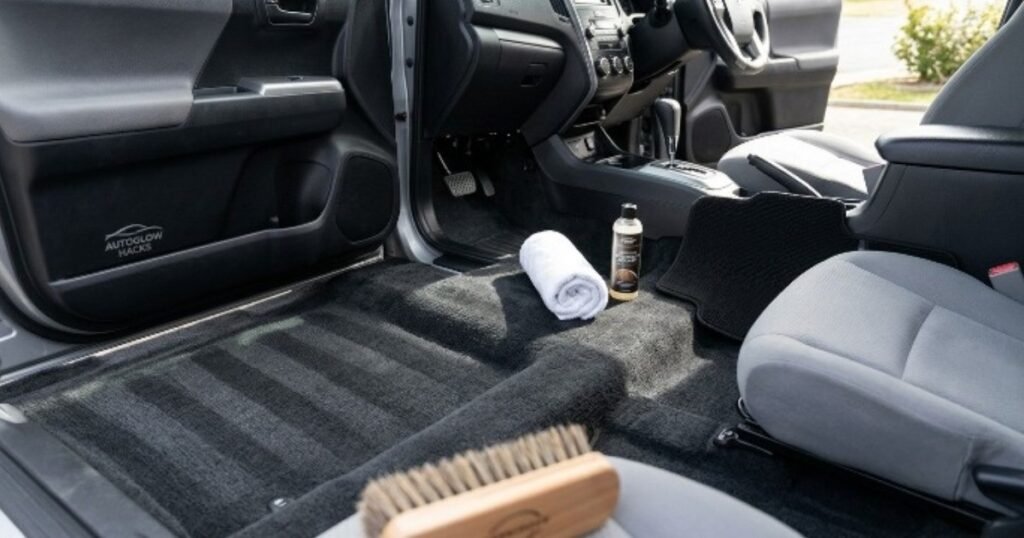
If you want to know how to clean car carpet fibers like a professional without spending a fortune, you are in the right place. Your car’s interior collects a lot more than just memories during daily commutes and road trips. From tracked-in mud and pet fur to coffee spills and crumbs, the buildup on car carpeting quickly adds up.
While most car owners regularly vacuum their home carpets, vehicle flooring often gets completely overlooked. Because messes are not addressed immediately, temperature changes inside a closed car cause trapped odors to grow stronger over time.
The good news is that learning how to clean car carpet upholstery to a like-new condition does not require expensive professional services. With the right tools and steps, you can easily handle this cleanup right from your own driveway.
Understanding Your Car Carpet Fabric
Most standard automotive carpets are constructed from cut-pile nylon or polyester fibers. Manufacturers choose these synthetic materials specifically for their durability and resistance to heavy wear.
These synthetic fibers are heat-bonded to a dense foam or rubber backing underneath. This thick backing provides essential cushioning, thermal insulation, and sound dampening properties inside the cabin.
Luxury vehicles may feature higher-density pile carpeting or premium wool blends that require more careful cleaning. No matter what you drive, always check your owner’s manual for specific interior care recommendations.
Essential Tools and Supplies Checklist
To achieve professional-grade results at home when discovering how to clean car carpet grime, you need to gather the right toolkit before starting. You do not need industrial garage extractors; a few basic household items work perfectly:
- A High-Powered Vacuum: Ensure it has a reliable crevice tool for tight corners and a brush attachment for lifting embedded dirt.
- A Dedicated Cleaning Solution: You can use a commercial upholstery shampoo or a DIY mix of warm water, white vinegar, and mild dish soap.
- An Oxygen-Based Pre-Treat Spray: Essential for breaking down tough, deep-set organic stains and dried grease.
- A Stiff-Bristle Upholstery Brush: A heavy-duty detailing brush or a strong old toothbrush for working the solution into the fibers.
- Clean Microfiber Towels: Always use clean, white towels to easily blot up liquid moisture and safely monitor dirt transfer.
- Baking Soda: The ultimate natural tool for absorbing moisture and completely neutralizing embedded organic odors.
Step 1: Prep the Interior and Remove Dry Debris
The absolute secret to a perfect deep clean is a thorough dry preparation phase. Never apply liquid cleaning solutions to a carpet that is still covered in loose surface dirt or sand.
If you skip this prep phase, the water will mix with the loose dirt to create a thick, muddy paste. This paste sinks deeper into the carpet fibers, causing permanent stains that are twice as hard to remove.
First, pull out all removable floor mats, seat organizers, and loose accessories from the car interior. This completely exposes the hidden edges, metal seat rails, and tight corners where heavy dirt concentrates.
Take the removable mats outside and shake them out vigorously against a wall to remove heavy surface dirt. Set them aside on a clean surface for detailed cleaning later.
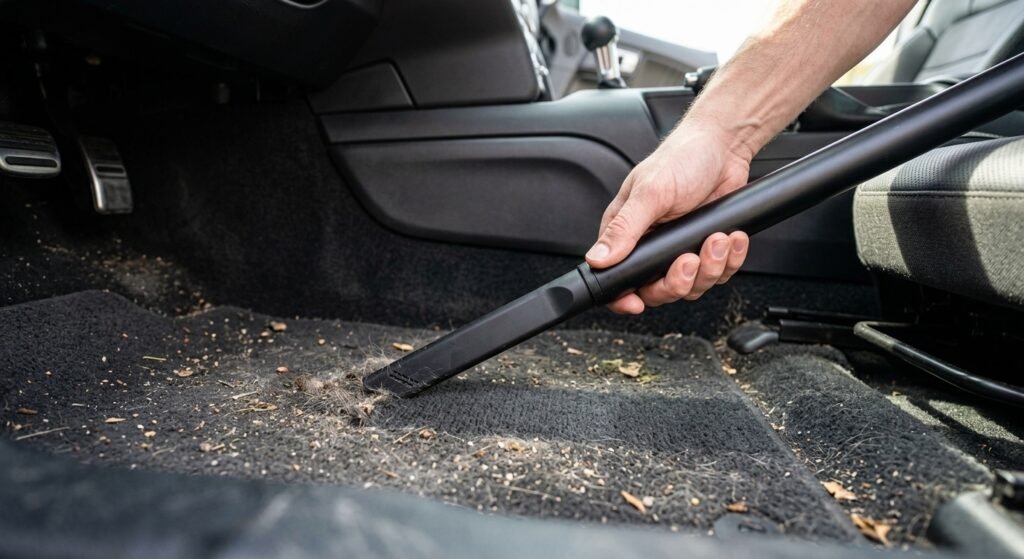
Next, attach the crevice tool or brush attachment to your vacuum cleaner. Start cleaning from the back seat floor area and work your way forward, using slow, overlapping strokes from left to right.
Slide both front seats completely forward and backward on their tracks to catch debris hiding underneath. Vacuum the center console, around the gear shifter housing, and inside the bottom of the cup holders.
For carpeted sections covered in stubborn pet hair, vacuum in multiple directions—lengthwise, crosswise, and diagonally. This multi-directional movement helps pull out the statically charged fur that weaves itself deep into the tight carpet pile.
Doing a detailed vacuuming run is the foundational step of learning how to clean car carpet fibers effectively.
Step 2: Perform the Golden Colorfastness Test
Before applying any commercial shampoo or homemade cleaning solution to your floors, you must perform a standard colorfastness test. This simple check prevents permanent bleach damage or chemical discoloration on your interior fabric.
Find a small, completely hidden area of the carpet fabric, such as deep underneath the front seat rails. Spray a small amount of your chosen wet cleaning solution onto that specific spot.
Wait three to five minutes, then press a clean, dry white paper towel firmly down onto the wet area for ten seconds. Inspect the paper towel carefully before proceeding.
If any of the carpet’s dye or color transfers onto the white paper towel, stop immediately and do not use that solution. If the towel stays perfectly clean and the fabric color looks normal, you are safe to proceed with how to clean car carpet fibers across the rest of the vehicle.
Step 3: Pre-Treat Stubborn Stains and Road Grime
Shoes constantly track greasy engine residue, driveway motor oil, dark asphalt grime, and thick mud into the driver’s footwell. If you also have coffee or food spills on your fabric seats, learn how to remove stains from car seats before treating the floor. To successfully tackle these heavily soiled areas, you need to apply a pre-treat spray.
Apply an oxygen-based pre-treat spot remover directly onto the targeted stains before doing a general wash. Let the pre-treatment solution sit undisturbed on the carpet fibers for three to five minutes without wiping it away.
This gives the formula enough time to safely break down thick oils and lift ground-in grime to the surface. This step makes the upcoming scrubbing phase significantly easier and prevents you from fraying the synthetic carpet fibers.
Breaking down these heavy oil spots early makes the core process of how to clean car carpet stains much faster.
Step 4: How to Clean Car Carpet With the Spray, Scrub, and Extract Method
Now it is time to deep clean the car flooring using your main carpet cleaning solution mixed with hot tap water. If you are cleaning manually, fill a high-quality spray bottle or a small wash bucket with your warm soapy mixture.
Always work in small, manageable sections (about two square feet at a time) rather than wetting the entire car floor at once. Spray your cleaning solution generously onto the targeted section of the carpet.
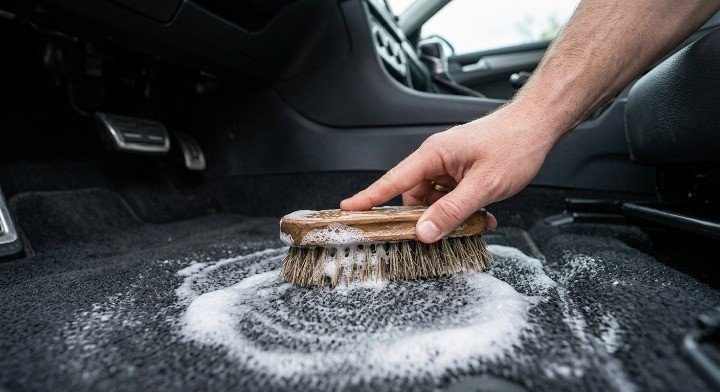
Use your stiff-bristle upholstery brush to gently agitate the carpet fibers in tight circular motions. Work the soap into a light lather to lift the embedded grime out of the pile backing.
Once the dirt has loosened, immediately press a clean, dry microfiber towel down hard onto the wet spot. Step on it with your foot to blot up and extract the trapped liquid into the towel.
Move directly to the next section, overlapping slightly with the area you just cleaned. Repeat this cycle until the entire floorboard area is done.
Step 5: Master the Drying and Odor Elimination Process
The single biggest risk when deep cleaning automobile carpets at home is over-saturation. If water seeps completely through the fibers into the dense foam backing underneath, it will trap moisture.
This trapped moisture will create a severe mold or mildew colony within 48 hours, leaving your car smelling terrible. To prevent this, go back over the damp areas multiple times with a completely dry microfiber towel.
Always keep all car doors and windows wide open during and after the cleaning process to maximize fresh airflow. For the absolute fastest drying times, perform your interior car detailing on a warm, dry, sunny day.
You can also place a portable household fan inside the cabin to increase circulation, or use a hand-held hairdryer on a medium heat setting. Keep the dryer moving constantly so you do not melt or scorch the synthetic fibers.
Let the carpet dry completely overnight before reinstalling your clean floor mats and headrests. While waiting for the interior to dry, you can also clean or remove tinted window film from a car if your old glass film is peeling or blurry. This ensures no hidden moisture remains trapped under the rubber floor mats, completing the entire process of how to clean car carpet mats and linings.
Proper ventilation prevents mildew issues, successfully wrapping up your project on how to clean car carpet upholstery at home.
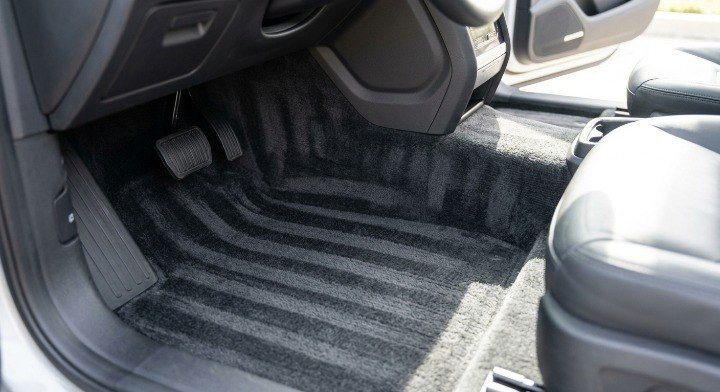
Pro DIY Tricks to Keep Car Carpets Cleaner for Longer
- Hang the Mats: If possible, hang your washed floor mats up vertically on a clothesline to dry instead of laying them flat on the ground.
- Immediate Dilution: If you accidentally spill coffee or soda while driving, immediately dilute the spot with a splash of cool water and blot it right away.
- The Placemat Trick: Keep an extra clean microfiber towel in your glove box and use it like a protective placemat over your lap whenever you eat inside the vehicle.
- Deep Clean Schedule: Aim to give your entire vehicle interior a thorough deep clean every six months to successfully tackle the seasonal buildup of mud and road salt.
Frequently Asked Questions (FAQs)
How do I safely remove dried mud and heavy dirt stains from a car carpet?
Always let wet mud dry completely before trying to clean it. If you scrub wet mud, you will simply spread the dark stain across a much larger surface area. Once the mud is totally dry, use a stiff brush to break it apart into loose dust and vacuum it up.
What is the best way to get rid of a lingering mildew smell in car carpets?
Mildew odors are caused by trapped moisture or organic material deep inside the carpet backing. Deep cleaning with an oxygen-infused spot formula will neutralize the bacteria causing the smell. After cleaning, make sure the interior dries completely with open doors and fans.
Can I use a standard household steam cleaner on my vehicle’s carpet?
While some household cleaners can work, standard home machines are usually too bulky to maneuver around car seats and tight corners. Using inappropriate home equipment also carries a high risk of over-saturating the carpet backing. A portable spot cleaner designed specifically for auto detailing offers better safety.
What is the best DIY solution for how to clean car carpet stains?
A highly effective homemade solution is mixing 1 cup of white vinegar, a few drops of mild dish soap, and 1 gallon of warm water in a spray bottle. It cuts through grease naturally without leaving sticky chemical residues behind.
Final Thoughts
Learning how to get a professional look when deciding how to clean car carpet cabins does not have to be an expensive or complicated chore. With a few simple tools, a solid DIY cleaning solution, and the correct step-by-step approach, you can easily restore your vehicle’s floors from your own driveway.
The real secret to success is speed and proper drying—act fast when spills happen, scrub gently in circular motions, and always allow the cabin to air dry completely. Follow this guide every six months, and your car interior will look and smell brand new year-round!
If you are dealing with other stubborn cabin smells like tobacco, be sure to read our separate complete guide on how to get smoke smell out of car easily.
For more professional car maintenance tips, visit our homepage at AutoGlow Hacks. For safety regulations regarding fabric cleaners, you can check out the guidelines on Wikipedia.
nice very informative and helpfull
thanks