
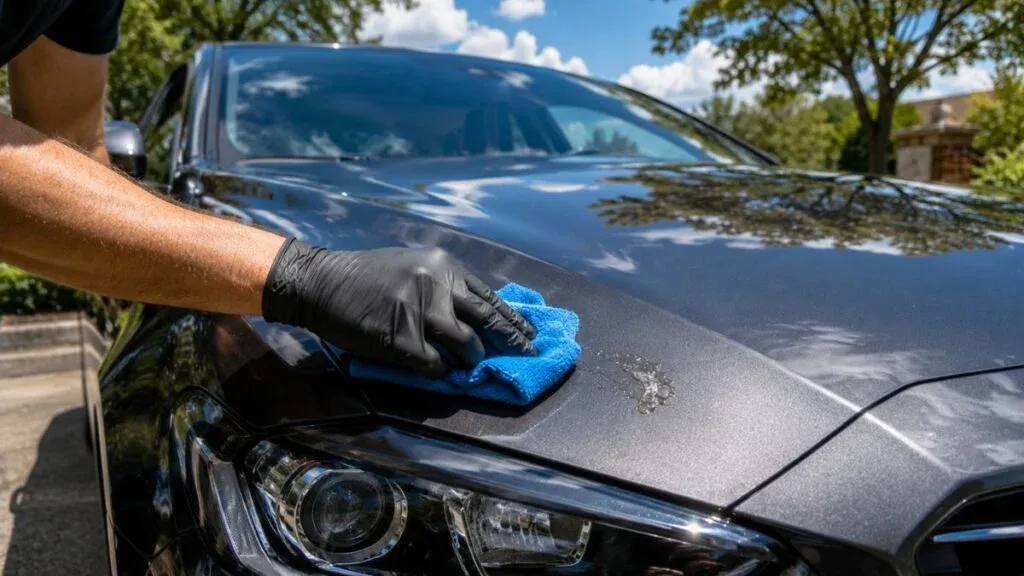
Learning how to remove tree sap from car paint safely is essential for every vehicle owner who wants to preserve their car’s glossy finish. Finding sticky, hardened tree sap on your vehicle is every driver’s worst nightmare. While idling under a shady tree on a hot summer afternoon keeps your cabin cool, the dropping sap acts like liquid superglue against your exterior clear coat.
If left untreated, environmental heat accelerates chemical bonding, allowing acidic tree sap to etch through your paint’s protective layer, leaving behind permanent discoloration, rough spots, and peeling clear coat. Knowing how to remove tree sap from car paint early prevents these costly paint repairs.
Removing baked-on tree sap from your car requires a smart, chemically sound strategy rather than aggressive physical scrubbing. Here at AutoGlowHacks, we reveal how to safely remove tree sap from car paint without scratching your finish, what dangerous household hacks you must avoid at all costs, and how to properly restore surface wax afterward.
Why Is Tree Sap So Dangerous for Car Paint?
Tree sap is an organic fluid packed with natural resins, sugar compounds, and acidic minerals designed to nourish the tree. When dropped onto a vehicle, it clings tightly to the synthetic clear coat.
Under direct sunlight and ambient summer heat, the liquid content in sap evaporates rapidly, turning fresh goo into a rock-hard, crystalline mass. As the sap bakes onto your car’s finish, the acidic compounds shrink and expand with daily temperature shifts, pulling on the microscopic clear coat layer underneath. If ignored for several weeks, understanding how to remove tree sap from car paint becomes harder because removing the sap will literally pull bits of clear coat off with it, leaving permanent etching that requires heavy machine compounding or costly repainting.
⚠️ Pro Detailing Warning: Never use your windshield wipers if fresh tree sap lands on your front glass! Turning on wipers creates long, gooey streaks across your vision that ruin wiper blades and smear sap across the windshield.
What You Need Before Starting (Essential Detailing Supplies)
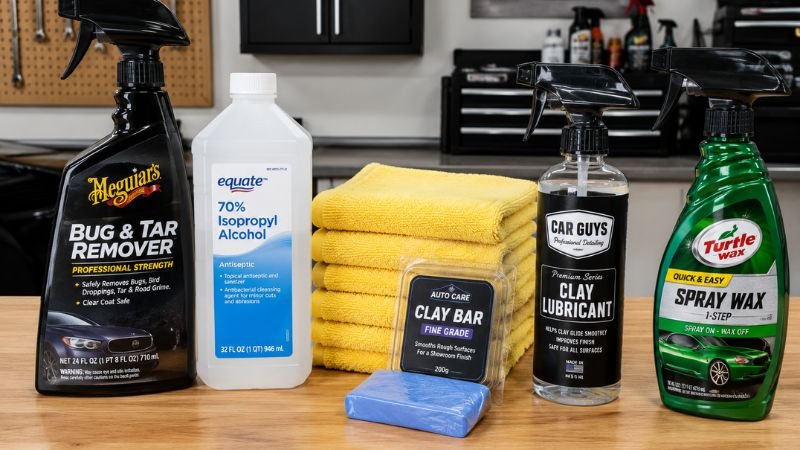
Before tackling stubborn tree sap, gather these safe and proven detailing supplies:
- Plush Microfiber Towels: Soft, scratch-free 350+ GSM cloths to soak and lift dissolved sap cleanly.
- Car-Safe Sap Solvent: Dedicated automotive Bug & Tar Remover, 70% Isopropyl (Rubbing) Alcohol, or Automotive Clay Bar.
- Warm Soapy Water & Wash Mitt: To pre-clean loose road grime and grit before applying liquid solvents.
- Automotive Clay Bar & Clay Luber: For stubborn, sun-baked sap spots that won’t budget with liquid solvents alone.
- Spray Wax or Synthetic Sealant: To restore the protective wax layer stripped during solvent treatment.
- Plastic Credit Card or Plastic Scraper: (Optional) For heavy sap mounds—never use metal blades or sharp knives on body paint!
5 Safe Methods: How to Remove Tree Sap From Car Paint
Method 1: How to Remove Tree Sap From Car Paint Using Isopropyl Alcohol
Rubbing alcohol (70% Isopropyl Alcohol) acts as a gentle, fast-acting solvent that breaks down organic sap resins without dissolving clear-coat paint when used correctly and sparingly.
- Wash the Surface First: Clean the affected panel with warm, soapy water to remove loose dirt and prevent dragging grit across the clear coat.
- Saturate the Microfiber Cloth: Pour a few drops of 70% rubbing alcohol onto a clean microfiber towel—never pour pure alcohol directly onto the car paint.
- Soak the Tree Sap Spot: Place the damp microfiber towel directly over the tree sap mound and press gently. Let it sit undisturbed for 30 to 60 seconds to soften the hardened resin.
- Wipe Gently: Gently wipe the softened sap in a single direction using light pressure. Do not scrub in circular motions or exert heavy force.
- Rinse & Protect Immediately: Wipe the area down with a damp, water-soaked cloth to neutralize remaining alcohol residue, then reapply protective car wax.
Method 2: Using Bug & Tar Remover for Heavy Baked-On Sap
Commercial bug and tar removers provide a foolproof way for how to remove tree sap from car paint when dealing with heavy, stubborn buildup. These products utilize mild petroleum distillates engineered specifically to dissolve road tar, insect splatter, and hardened tree sap quickly.
- Spray the bug and tar remover directly onto a clean microfiber applicator pad or folded towel.
- Hold the saturated pad against the tree sap spot for at least 45 seconds to let the active chemicals emulsify the sticky goo.
- Gently agitate the spot using light, straight-line motions.
- For raised, thick sap spots, carefully use the edge of an old plastic credit card held at a shallow 15-degree angle to nudge the softened top layer off.
- Buff off remaining residue with a dry, plush microfiber cloth.
Method 3: The Automotive Clay Bar Treatment for Embedded Sap
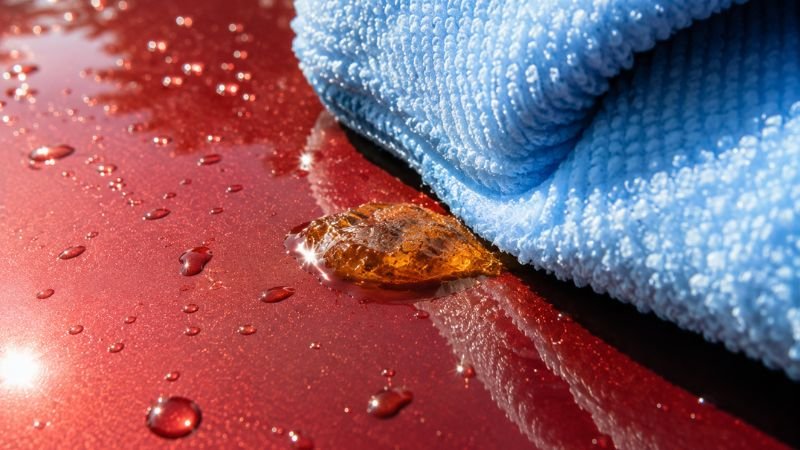
An automotive clay bar is another effective tool for how to remove tree sap from car paint when the sap is deeply embedded or sun-baked for months. If sap spots feel like rough bumps on your paint, liquid solvents alone might leave stubborn residue behind. A medium-grade detailing clay bar safely pulls embedded contaminants off your clear coat without scratching.
- Generously spray specialized Clay Lubricant over the sap-affected paint area to ensure slick movement.
- Flatten a small piece of automotive clay bar into a smooth, manageable disk.
- Glide the clay bar back and forth over the lubricated sap spot using light to medium pressure. The clay will pull the sap remnants off the surface into the clay mass.
- Check the clay surface frequently; fold and knead the clay to expose a fresh, clean side as it picks up contamination particles.
- Wipe the slick lubricant residue away with a soft microfiber towel.
Method 4: Warm Soapy Water Soak for Fresh Sap Drops
If you catch tree sap within a few hours of it dropping onto your vehicle, you do not need strong chemicals or specialized solvents.
- Mix warm water with a pH-balanced car wash soap in a clean detailing bucket.
- Soak a plush microfiber towel in the hot soapy mixture and lay it flat over the fresh sap spot for 2 to 3 minutes.
- The gentle heat and soapy suds will break down the un-hardened sugars and resins, allowing you to wipe it away effortlessly without stripping your base wax layer.
Method 5: Removing Tree Sap From Windows & Windshields (Glass Hack)
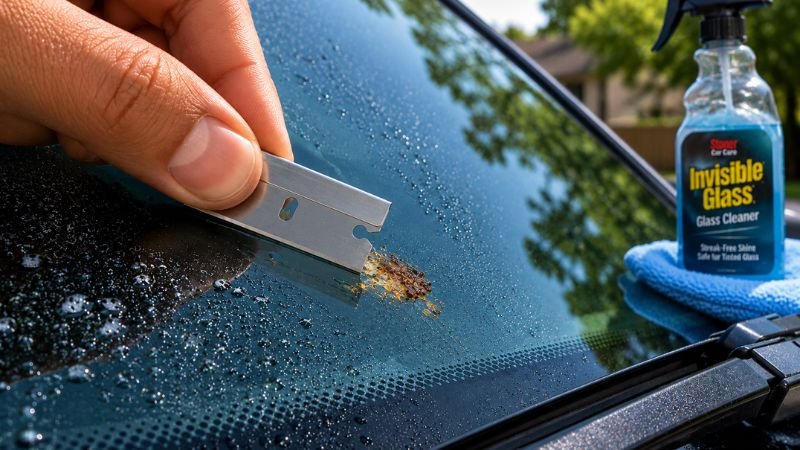
Removing sap from automotive glass requires a different approach because glass is significantly harder and does not scratch as easily as clear-coat paint.
- The Razor Blade Technique: Spray standard glass cleaner generously onto the window. Take a brand-new, sharp box cutter blade or safety razor blade, hold it flat at a 15-degree angle against the glass, and slowly scrape the hardened sap spot off.
- ❌ STRICT RULE: NEVER use razor blades or metal scrapers on painted car body panels, plastic trim, or tinted window films!
🚫 5 Dangerous Household Hacks That Destroy Car Paint
Internet forums and social media often suggest household quick fixes that can permanently ruin your car’s finish. Knowing how to remove tree sap from car paint correctly also means knowing what methods to avoid:
- Nail Polish Remover (Acetone): Acetone dissolves clear coat and auto paint instantly. Using nail polish remover on your car body will strip paint down to the raw primer within seconds.
- Bacon Grease, Lard, or Mayonnaise: While natural oils can break down sap resins slowly, food fats leave greasy residues, attract dirt, and strip protective wax coatings.
- Dish Soap: Household dish soap strips wax coatings and dries out rubber seals. Always use pH-balanced automotive wash soap instead.
- Kitchen Scrub Sponges or Scouring Pads: Scrubbing sap with green kitchen scouring pads creates severe swirl marks and deep scratches that require professional paint correction to fix.
- High-Heat Guns or Hair Dryers: Applying extreme direct heat to soften sap can melt your car’s clear coat or expand metal panels, leading to paint blisters and permanent damage.
Essential Post-Removal Step: Rewaxing Your Car Paint
Whether you used rubbing alcohol, commercial bug and tar removers, or a clay bar, solvents strip away all existing wax and synthetic paint sealants along with the sap.
Leaving your paint unprotected after sap removal leaves the bare clear coat vulnerable to UV rays, oxidation, acid rain, and future sap attacks.
- Inspect the cleaned surface for any lingering chemical haze or microscopic swirl marks.
- Apply a high-quality Carnauba wax or synthetic spray sealant using a clean foam applicator pad.
- Allow the wax to haze over for 2 to 3 minutes, then buff to a high-gloss shine using a plush microfiber cloth.
For official environmental guidelines on safe automotive washing and chemical disposal practices, check out the U.S. Environmental Protection Agency (EPA).
Frequently Asked Questions (FAQs)
Can I remove tree sap from my car without damaging the paint?
Yes. By learning how to remove tree sap from car paint with a safe solvent like 70% rubbing alcohol or a commercial bug and tar remover, you allow the chemical to dissolve the sap resin so it wipes off gently without aggressive scrubbing or paint scratching.
Is rubbing alcohol safe on car paint for tree sap removal?
Rubbing alcohol (70% Isopropyl Alcohol) is safe on car clear coats when used sparingly on a microfiber towel for spot cleaning. Always rinse the area with water and apply a protective coat of car wax immediately after use.
Will WD-40 remove tree sap from car paint?
WD-40 can soften tree sap, but its heavy petroleum oils leave a greasy film on paint that requires extra washing to remove. It also strips off wax protection completely, making dedicated car sap removers a safer option.
What should I do if tree sap has already etched into my clear coat?
If tree sap was left under direct heat for months, it may leave a dulled, sunken ring in the paint after the surface sap is removed. Fixing etched paint requires light hand polishing using a dual-action polisher and finishing compound to level the clear coat.
Final Thoughts
Mastering how to remove tree sap from car paint comes down to speed and using the right chemical solvents instead of brute force. If tree sap is a recurring issue in your parking spot, maintaining a consistent cleaning routine is critical—check out our guide on how often should you wash your car to adapt your seasonal wash schedule.
Once your exterior paint is clean, smooth, and freshly waxed, don’t forget to give the cabin some attention. Follow our step-by-step guide on how to clean car carpet to make sure your vehicle looks showroom-ready inside and out!