
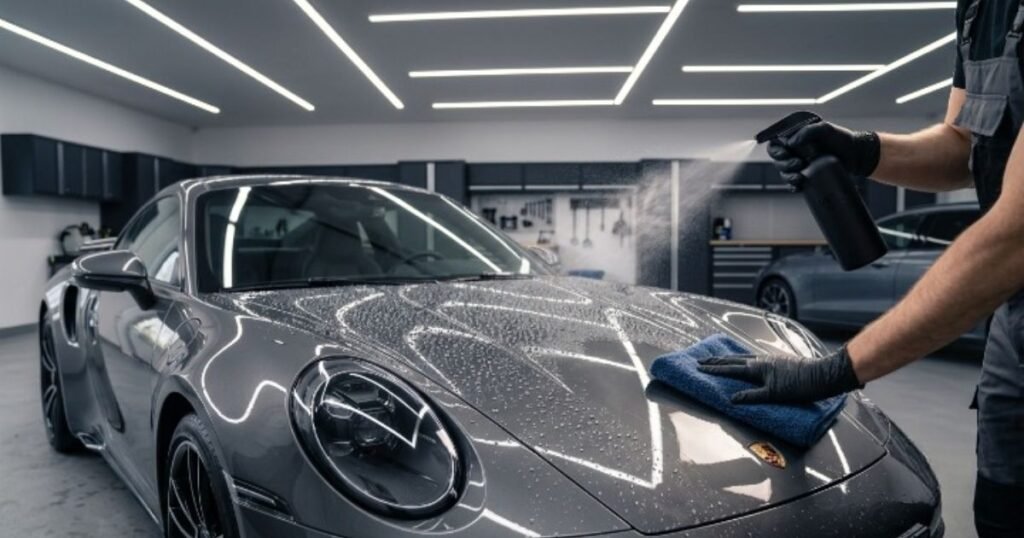
Rinseless car wash is advertised as the ultimate, modern, eco-friendly way to clean your car using just a single bucket of water and no garden hose. If you have spent any time browsing car detailing forums, watching YouTube tutorials, or scrolling through Instagram car care pages, you have likely run into the phrase. But if you are a professional detailer—or a passionate car enthusiast who actually cares about maintaining swirl-free, flawless paint—you are probably skeptical.
Does washing a car without rinsing actually cause scratches? Is it just a lazy DIY hack, or does a rinseless car wash have a place in a high-end detailing setup?
The truth is, a rinseless car wash is an excellent tool under the right circumstances. However, most internet guides lie to you because they are trying to sell you products. They tell you that a rinseless wash can replace your traditional wash completely. In this honest, no-BS guide, we are going to look at the real science of rinseless washing from a professional detailer’s perspective. We will break down why it fails as a prep wash, how it performs as a maintenance wash, and how to use it safely if your living situation forces you to.
What is a Rinseless Car Wash? (The Core Concept)
To understand why this process works (and where it fails), we first have to understand the chemistry. Unlike traditional car wash soaps (which are designed to create thick suds, break down dirt, and be washed away with high-pressure running water), a rinseless car wash solution is packed with advanced polymers.
When you spray or wipe a rinseless wash onto your car’s paint, these polymers immediately seek out the dirt particles on the surface. They physically encapsulate (wrap around) the microscopic dirt and dust, lifting them slightly off the paint. These polymers also create a high-lubricity barrier between the cloth and the clear coat, allowing your wash mitt or microfiber towel to glide over the dirt and pull it away without dragging it across the surface.
Because the polymers trap the dirt, you do not need to spray the car down with a hose afterward. You simply wipe the panel with your wash solution, and then immediately dry it with a high-quality microfiber drying towel.
Rinseless Wash vs. Waterless Wash vs. Traditional Wash
People often confuse these three washing methods, but they are very different:
- Traditional Wash (Hose and Bucket): Uses high foaming soaps and copious amounts of running water to flush away heavy dirt, mud, and road grime. This is the safest way to clean a very dirty car because gravity and water flow do 90% of the work. Alternatively, if you want a hose-free exterior cleaning method without physical contact, learning what is a touchless car wash can provide a safer alternative. For more on safe wash dynamics, read the official history of the Car Wash on Wikipedia.
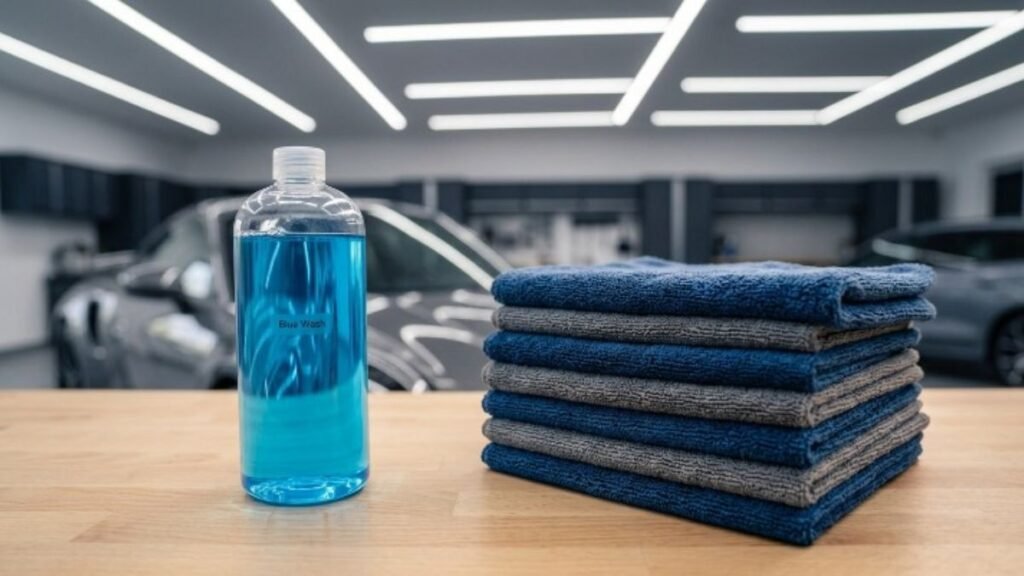
- Rinseless Wash: Requires one bucket of water mixed with a specialized rinseless car wash concentrate. You wash the panel with a wet microfiber, then dry it. There is no hose involved, and you use about 2-3 gallons of water total.
- Waterless Wash: Uses zero water. You spray a highly concentrated, ready-to-use product directly onto dry paint and wipe it off with a dry towel. This is only safe for light dust or fingerprints.
The Detailing Reality Check: Prep Wash vs. Maintenance Wash
As a professional, when a car needs to be washed, it is almost always for one of two distinct reasons: a Prep Wash or a Maintenance Wash. This is where the standard DIY internet articles fail to tell you the truth. A rinseless car wash cannot be treated as a one-size-fits-all solution for both. Let’s look at why.
1. The Prep Wash (Preparing for Paint Correction)
A Prep Wash is done to strip away old waxes, embedded contaminants, road oils, and silicones so that the paint is completely “bare.” This bare surface is crucial so you can machine polish the paint and apply a high-end ceramic coating or paint sealant that bonds directly to the clear coat.
On a Modern Car, for a prep wash on a modern car, a rinseless car wash is absolutely useless. To properly prep a car for paint correction, you need to use a hose and bucket approach. You need to perform machine polishing on the glass, machine scrub the tires to remove old dressings, and carry out extensive chemical and mechanical decontamination (iron removers, tar removers, and a clay bar). A rinseless wash cannot handle this level of heavy cleaning and decontamination.
Furthermore, almost all rinseless wash products on the market are designed to leave something behind on the paint—whether that is gloss enhancers, polymers, carnauba, silicones, or ceramic/graphene additives. If you’re interested in advanced protective shampoo coatings, check out our detailed guide on graphene car wash formulas. While protective polymers are great for a quick shine, they are a nightmare for prep work. If you are going to machine buff the paint, you do not want a product that leaves a coating behind, as it will clog your polishing pads and interfere with the ceramic bonding process. You just want clean, bare paint.
While prepping your vehicle, if you happen to find deep glass imperfections, check out our guide on how to remove scratches from car windshield surfaces before moving on to paint polishing.
On a Classic Car, if you are prep-washing a classic car or a muscle car, you generally want to avoid running water at all costs to prevent rust in hidden crevices. For this specific scenario, a waterless product like Dr. Beasley’s Prep Wash is the gold standard. Why? Because it is a true, pure cleaner that does not leave any gloss enhancers, polymers, or protection behind. It simply cleans the surface, leaving it bare and ready for paint correction.
2. The Maintenance Wash (Cleaning a Detailed Car)
A Maintenance Wash is performed on a car that has already been fully detailed, polished, and protected (with a wax, sealant, or ceramic coating). The goal here is simple: remove light road dust and grime without scratching the freshly corrected paint.
On a Modern Daily Driver, for maintaining a modern car, the extra lubrication provided by lots of running water is vastly superior. Using a high-pressure hose and a foam cannon flushes away the abrasive grit before you ever touch the paint with a wash mitt. This drastically reduces the risk of introducing micro-scratches or swirls into your perfect finish.
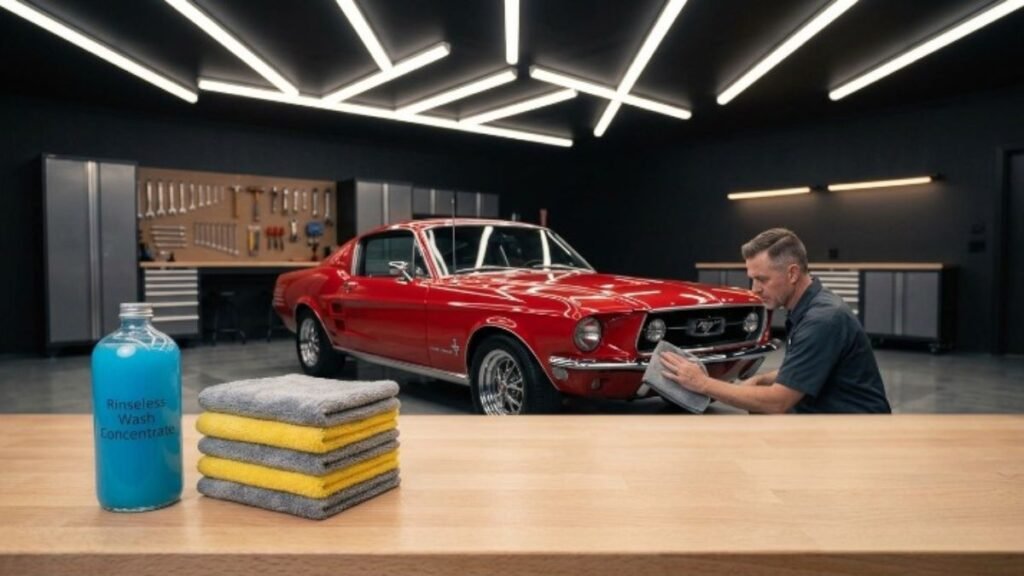
On a Classic Car, if you are performing maintenance on a restored classic car that never sees rain and only gathers light garage dust, a waterless prep wash or a very careful, highly lubricated rinseless car wash works beautifully to keep moisture out of vintage seams and window seals.
Who Actually Needs a Rinseless Wash?
If a traditional hose-and-bucket wash is safer for modern cars, why does the rinseless car wash category even exist? Because it solves real-world restrictions for the masses:
- Apartment Dwellers: If you live in an apartment complex or condo, you do not have access to an outdoor spigot or hose. A rinseless wash allows you to wash your car inside a garage or out in the parking lot with just a single bucket.
- Water Restrictions: Many regions face severe droughts or local eco-laws that ban the use of running hoses to wash cars. Rinseless washing is a legal, eco-friendly alternative.
- Winter Washing: Washing a car in freezing temperatures with a hose is miserable and dangerous (it turns your driveway into an ice rink). A rinseless car wash allows you to clean your car inside a closed, heated garage.
Step-by-Step Rinseless Car Wash (The Safe Professional Method)
If you are going to perform a rinseless car wash, you cannot wash it like a traditional car. Dunking a single sponge into a bucket and wiping the whole car will instantly scratch your paint. To do this safely, professionals use the “Gary Dean Method” (The Multi-Towel Technique). This method ensures that a dirty towel never goes back into your clean wash bucket, keeping your clean solution 100% free of grit.
What You Need:
- 1 Bucket with 2-3 gallons of clean water.
- Your favorite rinseless car wash concentrate (diluted according to instructions).
- A spray bottle filled with diluted rinseless wash solution (for pre-spraying).
- 6 to 8 plush, high-GSM (350+) microfiber towels.
- 1 premium microfiber drying towel (like a waffle-weave or twist-loop towel).
The Step-by-Step Process:
- Pre-Treat the Panel (Crucial Step): Take your spray bottle filled with the rinseless solution and generously spray the entire panel you are about to clean. Let it sit for 30-60 seconds. This begins encapsulating the dirt and softening the road grime before you touch the paint.
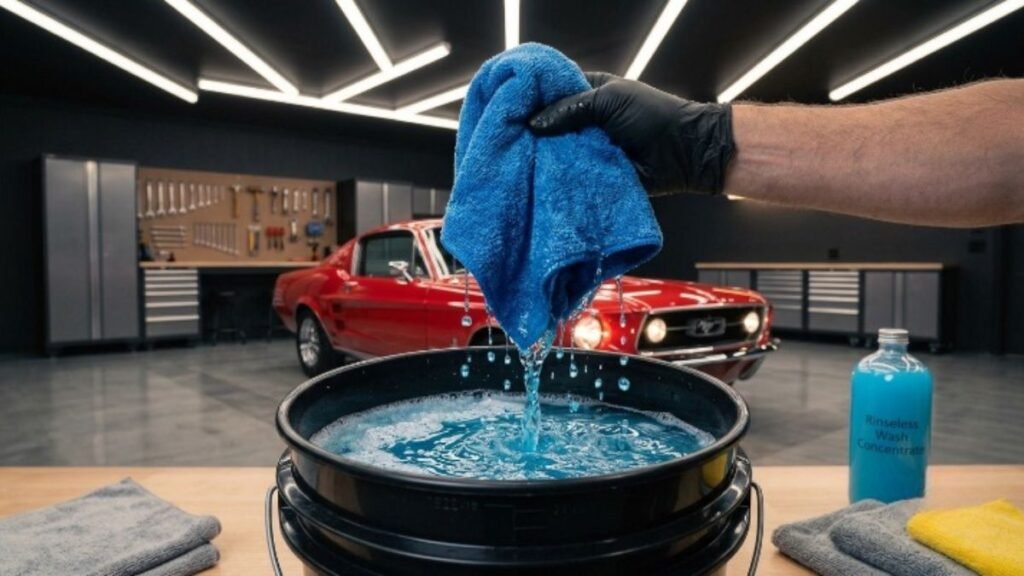
- Soak the Towels: Drop your 6-8 plush microfiber towels into the wash bucket filled with the rinseless solution. Let them soak completely.
- The Multi-Towel Wipe: Pull one wet microfiber towel from the bucket. Fold it in half, and then fold it in half again. This gives you 8 clean sides to work with.
- Wipe Without Pressure: Starting from the top of the car (roof) and working your way down, gently glide the towel across the panel in straight, horizontal lines. Do not apply heavy pressure; let the lubricated polymers do the work.
- Flip to a Clean Side: After one or two passes, flip the towel to a fresh, clean folded side. Once all 8 sides of that towel have been used, throw the towel into a dirty laundry bin. Never put a used towel back into your clean bucket!
- Dry Immediately: Before the panel has a chance to dry on its own, take your dry microfiber drying towel and gently buff the clean panel dry. You will be left with a streak-free, glossy finish.
- Repeat Panel by Panel: Grab a fresh, clean towel from the bucket and move to the next section. Work your way from the cleanest panels (roof, hood, trunk) down to the dirtiest panels (lower doors, rocker panels).
5 Critical Detailing Rules for a Safe Rinseless Wash
To guarantee you do not scratch your delicate clear coat, you must strictly follow these five professional detailing rules when performing a rinseless wash:
Rule 1: Never Wipe a Muddy Car
A rinseless car wash is strictly designed for light to moderate road grime, dust, and light rain spots. If your car is caked in thick mud, road salt, or heavy abrasive grit, you must pre-rinse the entire vehicle with a high-pressure hose first. Trying to wipe away thick mud with a rinseless towel will overwhelm the polymers and drag sharp dirt particles across your paint, leaving deep swirl marks.
Rule 2: Always Use the Multi-Towel (Gary Dean) Method
Never dunk a dirty, contaminated microfiber towel back into your clean wash bucket. By doing so, you release abrasive dirt particles back into your clean washing solution. Always keep your towels separate, flip them to a fresh, clean side for every single pass, and discard them into a dirty laundry bin once all sides are dirty.
Rule 3: Use Only High-GSM (350+) Plush Microfiber Towels
Cheap, thin microfiber towels from a local supermarket do not have the physical pile depth to absorb and safely pull encapsulated dirt away from the clear coat. You need premium, plush, high-GSM microfiber towels. The long fibers on these high-end detailing towels lift the trapped grit deep inside the weave, keeping it far away from your paint surface.
Rule 4: Never Wash in Direct, Hot Sunlight
Water spots and polymer streaks occur when your wash solution dries on the paint before you have a chance to dry it manually. Always wash your car in the shade, under a carport, or inside a closed garage. This keeps the paint cool to the touch and gives you plenty of working time to dry and buff each panel to a perfect, streak-free finish.
Rule 5: Always Pre-Treat with a Lubrication Spray
Never touch your paint with a wet wash towel without pre-spraying the panel first. Spraying a generous layer of diluted rinseless solution directly onto the panel acts as your primary layer of defense. It softens up stuck-on dust and starts the encapsulation process before any friction is applied, ensuring the safest possible glide.
Conclusion: The Final Verdict on Rinseless Detailing
A rinseless car wash is not a magical replacement for a proper hose and bucket wash. If you are preparing a car for serious paint correction, or if you want the absolute safest maintenance wash for your high-end ceramic-coated daily driver, nothing beats the lubrication and flushing power of running water.
However, for classic car storage maintenance, winter washing, or car owners facing strict water laws and apartment living, the rinseless wash is a fantastic, highly advanced tool. By understanding the chemistry, choosing products that don’t leave unwanted residue during prep work (like Dr. Beasley’s Prep Wash), and utilizing the multi-towel technique, you can keep your car clean, shiny, and completely scratch-free.
Enjoy the beautiful, scratch-free view on your next drive! For more expert automotive detailing guides and hacks to keep your vehicle looking brand new, visit our main resource page at AutoGlowHacks.