
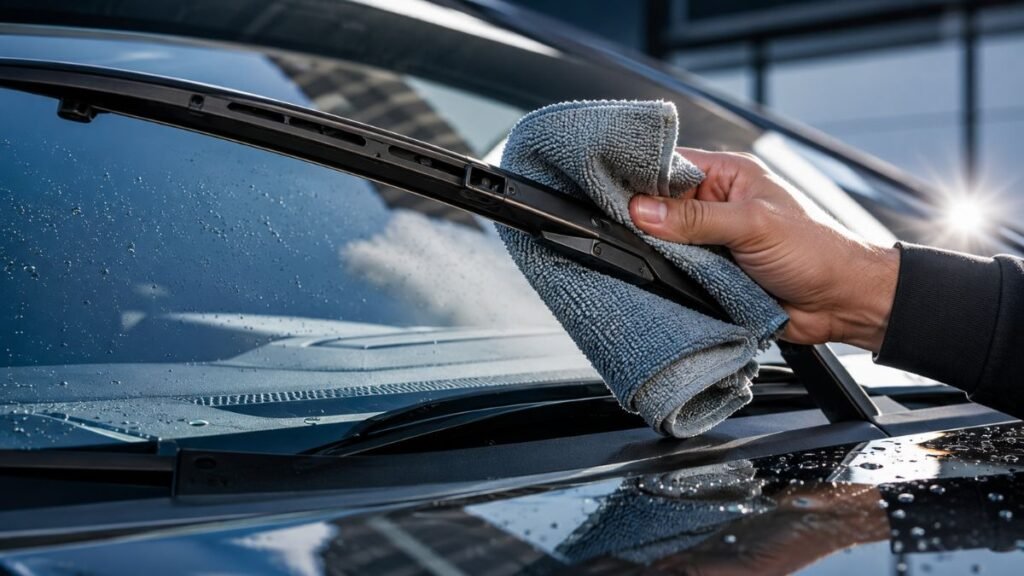
Whether you are driving through heavy summer downpours, icy winter sleet, or dusty highways, clear road visibility is your absolute first line of defense. However, even high-end, expensive wiper blades can start smearing, squeaking, and leaving blinding water streaks across your glass if they are covered in road grime, tree sap, and dried bug splatter.
Before you run out and spend $30 to $50 replacing blades that appear worn out, learning how to clean windshield wipers properly can instantly restore their original wiping efficiency and double their usable lifespan!
In this ultimate auto detailing guide, we will break down step-by-step methods to clean rubber wiper edges, restore frozen wiper pivots, debunk dangerous viral cleaning hacks, and share pro maintenance routines to keep your windshield crystal clear year-round.
🛠️ Essential Supplies Checklist for Cleaning Wipers
Before starting, gathering gentle cleaning supplies ensures you lift stubborn road grime without stripping or cracking delicate rubber polymers. If you are also dealing with deep glass imperfections or old window film on your front glass, review our guides on how to remove scratches from car windshield and how to safely remove tinted window film from a car before applying strong solvents near your automotive glass.
Here is what you need when preparing how to clean windshield wipers at home:
- Isopropyl Rubbing Alcohol (70%): The best professional solvent to dissolve oil buildup, road grime, and tree sap from natural rubber.
- Microfiber Towels or Lint-Free Rags: Soft cloths to wipe along the rubber edge without leaving lint strands behind.
- Mild Dish Soap & Warm Water: For a safe, gentle preliminary wash to remove loose mud and dust.
- Silicone-Based Lubricant Spray: To lubricate frozen metal arm pivots and keep spring tension even.
- Soft Toothbrush: For scrubbing tight mechanical joints and spring mechanisms on the wiper assembly.
🧼 Step-by-Step Method: How to Clean Windshield Wiper Blades
To achieve a completely streak-free finish, you must clean both the flexible rubber squeegee and the rigid arm frame. Follow this simple 5-step process when learning how to clean windshield wipers effectively.
Step 1: Lift Wiper Arms into the Service Position
Gently lift the wiper arm away from the glass until it locks into a vertical standing position. If your vehicle features hidden wiper arms tucked beneath the hood line, turn your ignition key to “ON” and switch off the car mid-swipe to bring the wipers up into the center service position safely.
⚠️ Detailer Warning: Never leave lifted wiper arms unattended without placing a thick folded towel over your glass. If a lifted arm accidentally snaps back down, the bare metal hook can shatter your windshield instantly!
Step 2: Wash Away Surface Mud and Grit
Dampen a microfiber cloth in a bucket of warm water mixed with a few drops of mild dish soap. Wrap the damp cloth around the rubber blade edge and pull it gently from end to end. Repeat this step until the initial layer of mud, pollen, and bugs is removed.
Step 3: Deep Clean Rubber Edges with Rubbing Alcohol
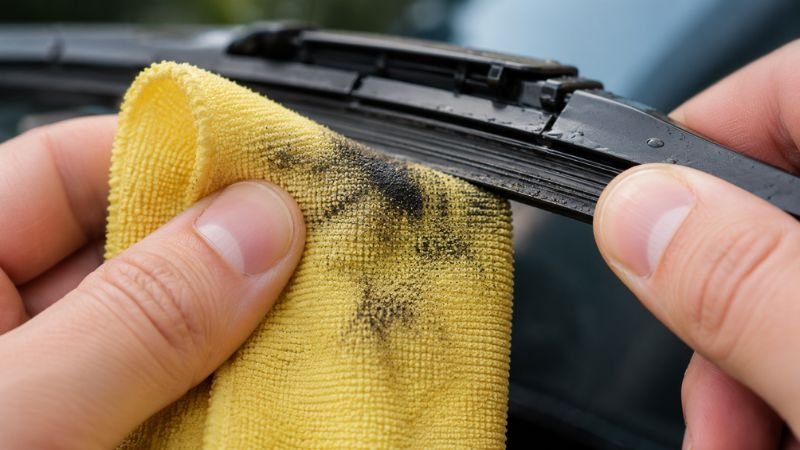
To remove stubborn road oils and silicone film that soapy water leaves behind, pour Isopropyl Rubbing Alcohol onto a fresh microfiber towel. Pinch the rubber squeegee edge gently between your thumb and index finger and slide the towel down the length of the blade.
Check your towel—you will see dark black/gray residue. Continue wiping with clean sections of the alcohol-dampened towel until no more black grime transfers off. Knowing how to clean windshield wipers using rubbing alcohol is the absolute fastest way to stop blade chatter instantly!
Step 4: Clean and Lubricate Wiper Arm Pivots
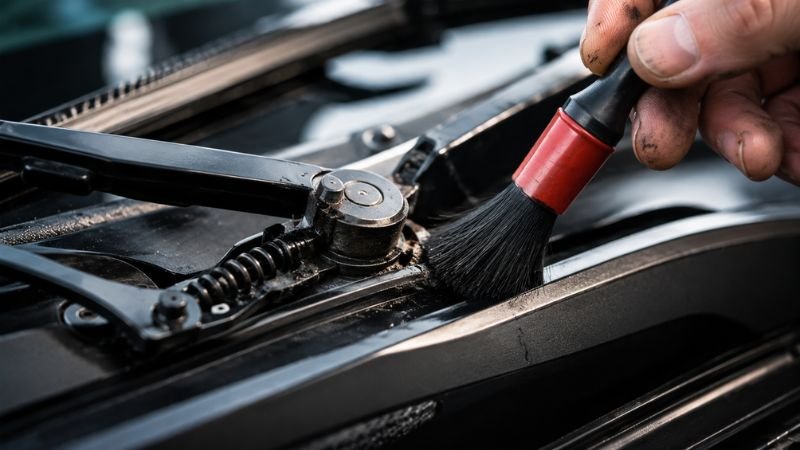
Wiper chatter and missed spots on the glass are often caused by stiff or rusting arm pivots that fail to apply firm, even pressure against the windshield. Use a soft toothbrush dipped in soapy water to scrub the metal joints and tension springs at the base of the wiper arm. Once dry, apply a light spray of silicone lubricant to the pivot joint to keep movement smooth and prevent rust corrosion.
Step 5: Clean the Glass Surface
Cleaning your wiper blades without cleaning your glass is completely counterproductive. Road oils, tree sap, and hydrophobic car wash wax on the glass will immediately contaminate clean rubber blades. Thoroughly wash your windshield with an ammonia-free automotive glass cleaner. If you routinely wash your car’s exterior, switching to a touchless car wash helps prevent wax and harsh chemical residues from depositing onto your wipers. Understanding how to clean windshield wipers along with proper windshield care guarantees crystal-clear driving.
🔍 Wiper Blade Types & How Maintenance Differs
Not all wiper blades are constructed the same way, and understanding your specific blade style helps you apply proper care without damaging sensitive components:
- Conventional Frame Blades: Feature metal bracket frames. Dirt gets trapped easily in the metal joints, causing stiff movement. Always brush out the metal hinges when executing how to clean windshield wipers.
- Beam Blades (Flat Blades): Constructed with a sleek, aerodynamic curved steel spine and integrated rubber scraper. These require smooth alcohol wipes down the full edge to maintain uniform pressure.
- Hybrid Blades: Combine the strength of a metal frame with an aerodynamic shell. Ensure dirt does not accumulate beneath the shell casing during routine cleaning.
🛠️ Wiper Troubleshooting & Quick Fix Matrix
If your wipers are still misbehaving after a thorough clean, use this quick diagnostic guide to identify the root cause:
| Symptom | Probable Cause | Corrective Action |
| Chattering / Hopping | Oil/Wax film on rubber or glass | Wipe blades with Isopropyl alcohol & strip windshield glass with glass cleaner. |
| Streaking Water Lines | Dried bug guts, sap, or split rubber | Perform deep alcohol cleaning. Replace if rubber edge has physical tears. |
| Squeaking Noise | High surface friction or dry glass | Ensure full washer fluid reservoir; lubricate wiper arm pivot springs. |
| Missed Center Spots | Weak arm spring tension | Clean and apply silicone spray lubricant to the lower wiper arm pivot joint. |
⚠️ Fact Check: Safe vs. Dangerous Wiper Cleaning Hacks
The internet is packed with quick DIY shortcuts, but using the wrong chemical can ruin natural rubber and damage your car’s clear coat.
| Cleaning Solution / Product | Is It Safe? | Detailing Verdict & Chemical Impact |
| 70% Rubbing Alcohol | ✅ 100% Safe | Best solvent! Cleans grime instantly and evaporates cleanly without breaking down rubber polymers. |
| Warm Soapy Water | ✅ 100% Safe | Great for routine washing. Removes surface dirt without stripping rubber elasticity. |
| Diluted White Vinegar (50/50) | ⚠️ Use Caution | Acetic acid softens hardened rubber, but undiluted vinegar can strip vehicle paint and clear coat if spilled. Rinse thoroughly! |
| WD-40 Multi-Use Spray | ❌ DANGEROUS | NEVER USE! WD-40 leaves a heavy oil film that smears across the glass, attracts road dust, and ruins night vision clarity. |
| Petroleum Jelly (Vaseline) | ⚠️ Emergency Only | Can briefly soften sun-dried rubber, but attracts dirt rapidly. Use dedicated silicone protectants instead. |
According to step-by-step automotive care tutorials on wikiHow Vehicle Care, practicing safe routines on how to clean windshield wipers using gentle alcohol wipes is the best way to remove grease without ruining the rubber edge.
❄️ Seasonal Wiper Care: Summer vs. Winter Strategies
Environmental conditions dictate how rapidly rubber degrades. Adapting your cleaning routine to seasonal weather extremes will preserve wiping performance:
Summer Heat Protection
- Direct UV sunlight bakes road oils onto rubber and dries out natural moisture, causing fine micro-cracks.
- Pro Tip: Park in shaded areas whenever possible, and wipe down blades with rubber protectant spray once every two months.
Winter Freezing Care
- Never use your wiper blades as ice scrapers! Operating blades over rough ice shreds the thin rubber wiping edge instantly.
- Pro Tip: Lift wiper arms off the windshield on freezing nights to prevent rubber from bonding to frozen glass. Learning how to clean windshield wipers after winter storms helps remove abrasive road salt completely.
💡 DIY Windshield Washer Fluid Recipe (Cost-Saving Hack)
If your washer fluid reservoir is dirty or empty, you can formulate your own effective cleaning solution at home for pennies using simple household ingredients:
- 85% Distilled Water (Prevents mineral deposits in spray nozzles)
- 15% Automotive Glass Cleaner (Dissolves road film and bug splatter)
- 1 Tablespoon Liquid Dish Soap (Provides essential wiping lubrication)
Mix these ingredients thoroughly in a clean jug before filling your vehicle’s washer fluid reservoir. This custom mix provides high lubricity, keeping wiper blades gliding smoothly across the glass without skipping.
📅 How Often Should You Clean Windshield Wipers?
Knowing how to clean windshield wipers should be an integral part of your monthly car care routine:
- Monthly Maintenance: Wipe down blades with rubbing alcohol every 3 to 4 weeks.
- Seasonal Changes: Clean blades thoroughly at the start of spring to remove harsh road salt and winter grit.
- After Car Washes: Wipe off excess spray wax or ceramic sealants that wash stations deposit onto rubber blades.
❓ Frequently Asked Questions (FAQs)
Can I use laundry detergent when figuring out how to clean windshield wipers?
While mild laundry detergent can remove surface dirt, it often leaves behind a sticky residue if not completely rinsed with clean water. Rubbing alcohol or mild dish soap is always a safer, residue-free choice.
Why are my windshield wipers squeaking after I clean them?
Squeaking usually occurs when the glass surface has a dry friction layer or oil buildup. Clean the windshield glass thoroughly with glass cleaner. Knowing how to clean windshield wipers and glass together resolves friction issues.
How long do windshield wiper blades last with proper care?
With regular monthly cleaning and parking in shaded areas, quality rubber wiper blades typically last 1 to 2 years. Without care, heat and UV radiation will degrade them in as little as 6 months.
When should I replace my wiper blades instead of cleaning them?
If the rubber blade edge shows physical cracks, missing chunks, severe splitting, or permanent curvature, cleaning will not fix the issue. It is time to install fresh replacement wiper blades.
🏁 Final Thoughts
Mastering how to clean windshield wipers is one of the easiest, most cost-effective vehicle maintenance routines every car owner should know. Spending just 5 minutes a month with a bottle of rubbing alcohol and a microfiber cloth will protect your windshield glass, prevent annoying squeaks, and guarantee crystal-clear vision during severe weather.
While taking care of your vehicle’s exterior and glass, don’t forget to keep your cabin looking just as fresh! Check out our step-by-step guide on how to clean car carpet to keep your interior floor mats free from dirt and moisture, or explore more auto detailing guides at AutoGlowHacks! Reading a full guide on how to clean windshield wipers is the ultimate shortcut to crystal-clear glass.