
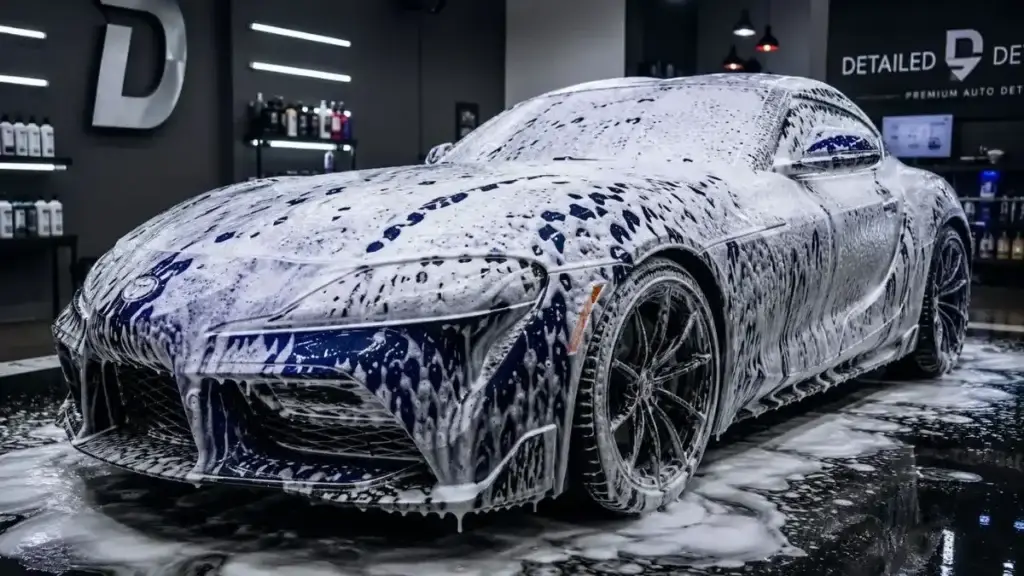
When it comes to maintaining a flawless, showroom-like reflection on your vehicle’s exterior, the order of operations matters more than the actual products you use. While most vehicle owners focus heavily on a two-bucket wash method and natural car wax, they frequently skip the single most crucial step in preventing wash-induced swirl marks: applying a dedicated prewash.
What is a car prewash? It is a non-contact cleaning stage that uses specialized chemicals, like a citrus spray or Snow Foam, to soften and loosen road grime, grit, and mud before you physically touch the vehicle with a wash mitt. Incorporating this step into your routine is designed to drop the risk of clear coat damage by 90%, ensuring that your main wash water stays clean and free from microscopic, sharp-edged particles that can mar your finish.
Here at AutoGlowHacks, we dive deep into the mechanics, environmental benefits, financial costs, and structural importance of this modern cleaning technique. We will show you how to properly execute this cleaning routine right in your garage.
How Does a Car Prewash Work?
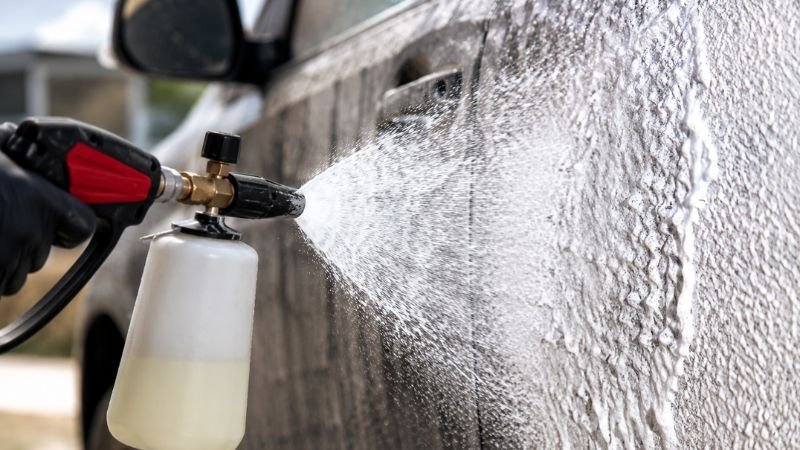
To fully understand this cleaning routine, you need to look past simple rinsing with plain water. A dedicated chemical application relies on targeted engineering and advanced fluid dynamics to physically lift bonded contaminants from the surface. The entire process follows a careful sequence:
- Product Selection: Detailing enthusiasts usually choose between a high-foaming Snow Foam applied via a foam cannon or a high-alkaline citrus formula applied via a pump sprayer.
- Chemical Dwelling (Detergency): These chemical detergents are heavily sprayed over the entirely dry vehicle. A quality formula encapsulates microscopic grit particles and breaks the molecular bonds between road grime, oil film, insect splatters, and your clear coat.
- Encapsulation Process: While a Snow Foam prewash looks cool, its real function is gravity. As the thick foam creates a blanket, it traps grit. As gravity pulls the foam downward, it gently lifts the sharp debris off the paint, suspending it within the foam itself.
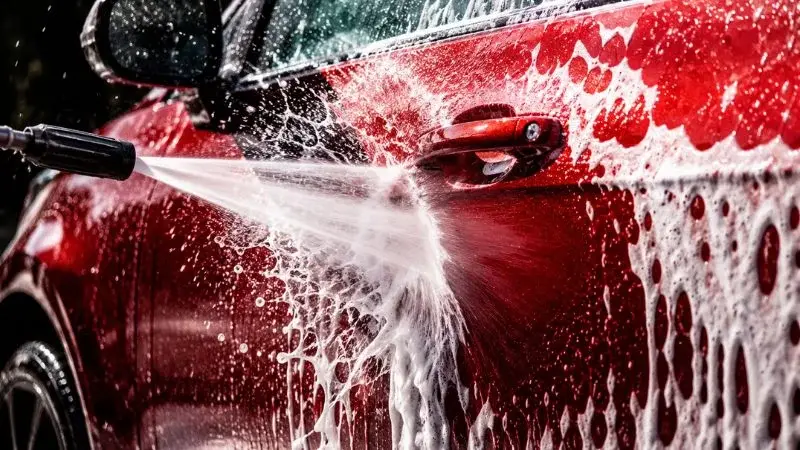
- High-Pressure Rinsing: Before the product can dry on the surface, high-pressure water jets rinse the foam blanket and all suspended debris away from the panels to prevent damaging the clear coat, a key principle highlighted in automotive car care guidelines on Car and Driver.
3 Major Pros of Utilizing a Prewash Stage
If you are considering incorporating this method into your monthly maintenance program, analyzing a prewash routine reveals three primary advantages that make it an incredibly attractive option for surface protection:
1. Drastically Drops Friction Scratch Risks
The single greatest benefit of this step is the complete removal of sharp surface contaminants before physical agitation. Traditional wash methods involve dragging a mitt across the surface. If grit from a muddy off-road trip is still on the paint, it acts like sandpaper, creating millions of microscopic swirl marks that ruin your paint reflection. Executing a prewash eliminates this foundational risk entirely.
2. Maximum Safety for Modern Automotive Paint Coatings
Because this method relies on specialized chemicals, modern automotive paint care, specifically high-end nano ceramic coatings, loves it. A slick, coated surface easily withstands chemical cleaning, and the lack of physical scrubbing during the initial cleaning stage means your coating’s vital hydrophobic layers last much longer.
3. Provides a Safe “Maintenance Rinse” Solution
Often, your vehicle isn’t “bucket-dirty”—it’s just dusted. For vehicles with only light dust or fresh road film, a quick chemical application can serve as a non-contact maintenance solution. You can apply a slick citrus spray, let it dwell for 3 minutes, rinse it off, and heated-air dry it for a perfectly clean car in under 15 minutes, completely avoiding physical contact.
3 Critical Downsides to Understand
Despite the lack of friction scratches, fully understanding the limits of a prewash also means analyzing its technical limitations, environmental impact, and physical risks:
1. Ineffective Against Deeply Bonded Grime
Because there is zero physical agitation or mechanical scrubbing, a high-pressure chemical spray can only do so much. A standalone cleaning cycle heavily struggles against heavily baked-on bugs, thick mud buildup, road tar, and bonded industrial fallout. If your car has months of heavy buildup, it may still leave behind a thin film of road grime.
2. Increases Maintenance Costs and Product Complexity
Unlike a basic regular car wash which requires one shampoo, executing a proper prewash requires buying a foam cannon (or pump sprayer), a pressure washer, and specialized detergents like Snow Foam or citrus formulas. It adds to the overall complexity of your detailing arsenal and routine.
3. Heavy Reliance on Aggressive Chemical Formulations
To compensate for the lack of mechanical scrubbing, some heavy-duty formulas utilize highly concentrated chemical detergents to dissolve dirt. Frequent exposure to harsh chemicals can dry out exterior rubber window seals, fade delicate plastic trim, and prematurely strip away delicate paint protections like traditional natural car waxes or low-tier sealants. This drawback is similar to the challenges faced with an automated touchless car wash system.
Pro Detailing Tips & Strategy
To safely get the absolute best out of your prewash routine, implement these professional strategies to minimize clear coat damage:
- Choose the Right Product: Select a pH-neutral snow foam for regular, non-contact dust maintenance on a coated car. For heavily soiled vehicles, choose an alkaline-based formula to dissolve heavy grease and mud buildup efficiently.
- Always Apply to Dry Panels: Applying chemicals to a dry surface increases the concentration of the product as it hits the dirt directly. If you pre-rinse with water, you dilute the product, making it less effective at dissolving molecular grit.
- Never Let Chemical Products Dry: Dwell time is crucial, but you must rinse the foam blanket before it gets a chance to dry in direct sunlight. Dried residue can leave chemical mineral stains that require corrective detailing to remove safely.
- Build a Strong Foundational Defense: Ensure your vehicle has a strong foundational layer of defense, such as a ceramic or durable graphene coating. Nano-coatings create an ultra-slick surface that allows high-pressure water to sheet dirt away far more effectively after a prewash application.
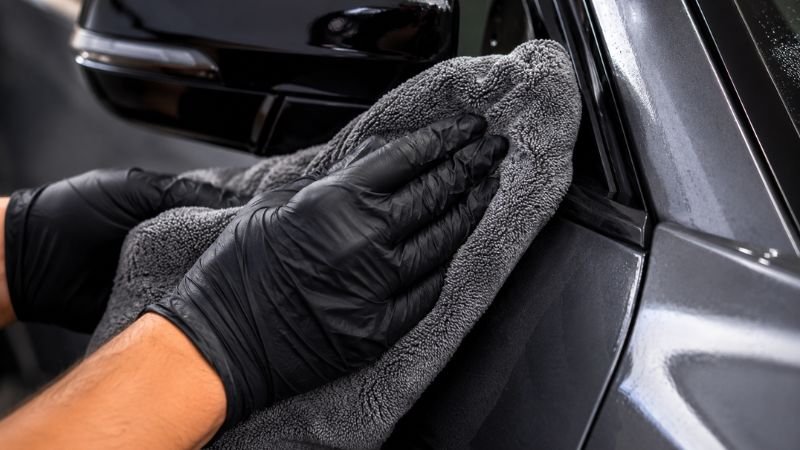
- Manage Residual Micro-Spares Manually: If residual dust remains on deep body lines after rinsing, pull over and use a clean microfiber towel with a detailing spray for a safe manual wipe down.
Final Verdict: Is a Car Prewash Necessary for You?
Ultimately, exploring what a prewash does shows that it is an incredibly useful tool for modern automotive maintenance, providing unparalleled convenience and unmatched protection against wash-induced swirl marks. If your priority is completely avoiding friction scratches on a valuable finish, a prewash is an essential foundational step.
However, this step only prepares the surface. For a truly corrected and protected finish inside and out, combining a prewash with a proper manual wash method or professional auto detailing session remains the gold standard in premium vehicle care.