
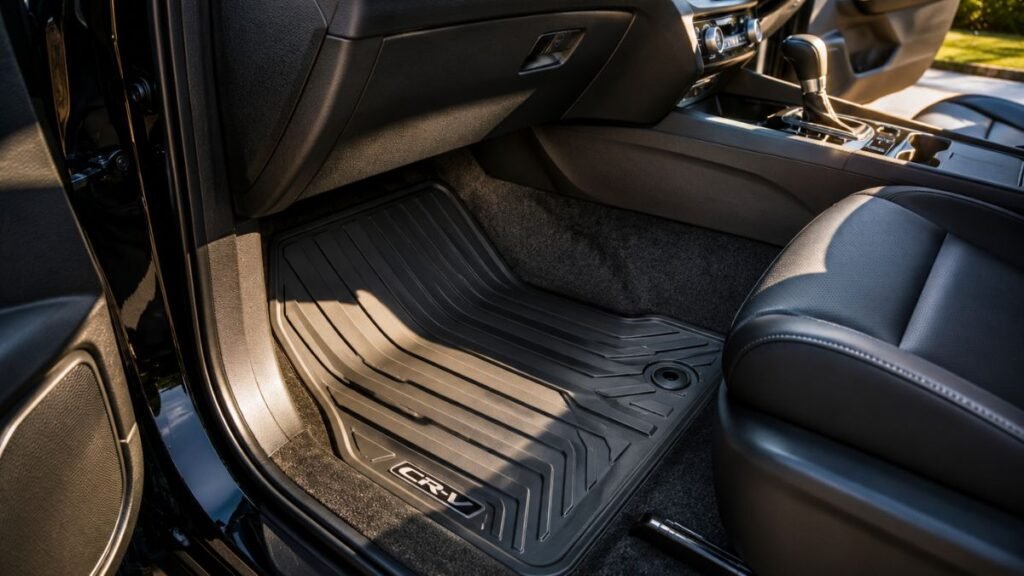
Finding fuzzy white or green patches growing on your vehicle’s floor is every owner’s nightmare. Beyond the foul, damp odor, mold spores floating in an enclosed cabin pose severe respiratory health risks. If you are searching for how to clean mold from car carpet effectively without ruining your upholstery or spending hundreds on professional detailing, you are in the exact right place.
Because vehicle carpets feature thick padding underneath, trapped spills and moisture create an ideal breeding ground for fungus. Fortunately, eliminating spores and restoring a fresh cabin doesn’t require complex tools.
Here at AutoGlowHacks, we break down the exact chemical-free remedies, step-by-step restoration protocols, and preventative strategies to permanently sanitize your floorboards.
Why Is Mold Growing on Your Car Floor?
Before learning how to clean mold from car carpet surfaces, you must understand what feeds the outbreak. Spores exist naturally in the air, but they only germinate when three specific conditions align inside your cabin:
- Trapped Moisture: Leaky sunroof drain tubes, rain tracked in on shoes, or spilled coffee that seeps into the carpet sub-padding.
- Lack of Ventilation: Leaving windows rolled up tightly during humid or rainy weather traps damp air inside.
- Dark Environments: The areas underneath floor mats and front seats receive zero direct sunlight, allowing fungal colonies to expand within 24 to 48 hours.
Understanding how moisture ruins interior fabrics also connects to general interior care. Once you eliminate mold, learning proper techniques on how to clean car carpet will help keep your interior spotless year-round.
Essential Safety Gear & Tools Needed
To safely execute this guide on how to clean mold from car carpet, collect the following items. Never attempt to scrub active spores without protective gear, as agitating dried fungus releases airborne toxins. For detailed safety guidelines on handling fungal growth, refer to the official mold moisture control principles outlined on the Environmental Protection Agency (EPA).
- Safety Equipment: N95 mask, rubber gloves, and protective eyewear.
- Cleaning Agents: Distilled white vinegar, baking soda, and warm water.
- Tools: Spray bottle, stiff-bristle carpet brush, and clean microfiber towels.
- Equipment: Dry/Wet shop vacuum (preferably equipped with a HEPA filter).
Step-by-Step Guide: How to Clean Mold from Car Carpet
Follow these 5 field-tested steps to destroy fungal roots, lift stubborn dark stains, and eliminate damp odors permanently.
Step 1: Ventilate and Dry Vacuum the Area
Park your vehicle outdoors in direct sunlight and open all four doors to maximize airflow. Put on your protective gear. Using a shop vacuum with a HEPA filter, carefully vacuum the affected carpet area to pull up loose surface spores.
Pro Tip: Avoid using a household vacuum cleaner without a HEPA filter, as standard exhausts will blow active spores into your home’s air.
Step 2: Apply a Natural White Vinegar Solution
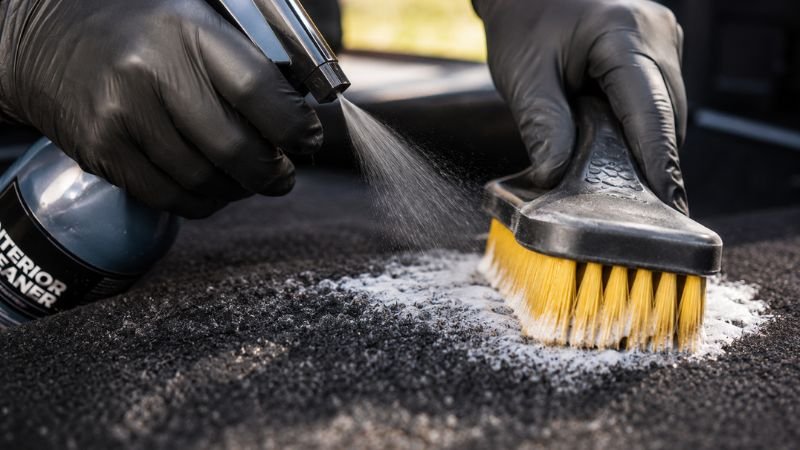
Distilled white vinegar contains acetic acid, which penetrates deep into porous carpet fibers to destroy fungal structures at the root. Mix equal parts white vinegar and warm water in a spray bottle. Heavily mist the moldy carpet until damp, but avoid soaking the padding underneath. Let the solution dwell for 15 to 20 minutes to kill the spores.
Step 3: Agitate with a Stiff Brush and Blot
Take a stiff-bristle detailing brush and scrub the carpet in circular motions. This mechanical action breaks apart the dead mold colonies and lifts trapped grime. Immediately follow up by firmly pressing a clean microfiber towel against the carpet to blot away the lifted residue and excess liquid.
Step 4: Deodorize and Moisture-Absorb with Baking Soda
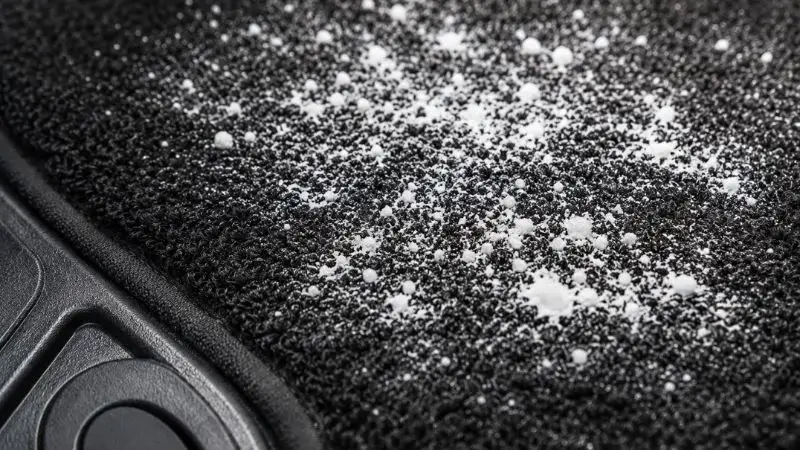
Even after killing active growth, musty odors often linger. Generously sprinkle pure baking soda over the damp carpet. Baking soda acts as a natural desiccant and pH neutralizer. Allow the powder to sit for at least 2 to 4 hours (or overnight for severe cases) to absorb residual moisture and trapped smells before vacuuming it up completely.
Step 5: Ensure Complete Drying
Leaving your carpet even slightly damp will cause the fungus to return within a few days. Leave your car doors open in the sun, use a portable fan, or run your vehicle’s heater on high with recirculate turned off for 20 minutes to evaporate every trace of moisture.
3 Critical Pitfalls to Avoid
When discovering how to clean mold from car carpet, avoiding common mistakes is just as vital as using the correct cleaning solution:
- Never Use Household Chlorine Bleach: Bleach will permanently discolor dyed automotive carpet fibers, weaken cloth backing, and emit dangerous chemical fumes inside an enclosed cabin.
- Avoid Over-Saturating the Carpet: Flooding the floor with excess water pushes moisture deeper into the underlying foam insulation, creating a hidden breeding ground underneath the subfloor.
- Ignoring the HVAC Vents: If mold spores travel into your air conditioning ducts, running the AC will contaminate your clean carpet again. Spray an automotive AC disinfectant into your intake vents to keep cabin air pure.
How to Prevent Mold from Returning
Once you successfully execute this guide on how to clean mold from car carpet, implement these preventative habits:
- Fix Door and Sunroof Leaks: Regularly inspect rubber door seals and clear clogged sunroof drain lines.
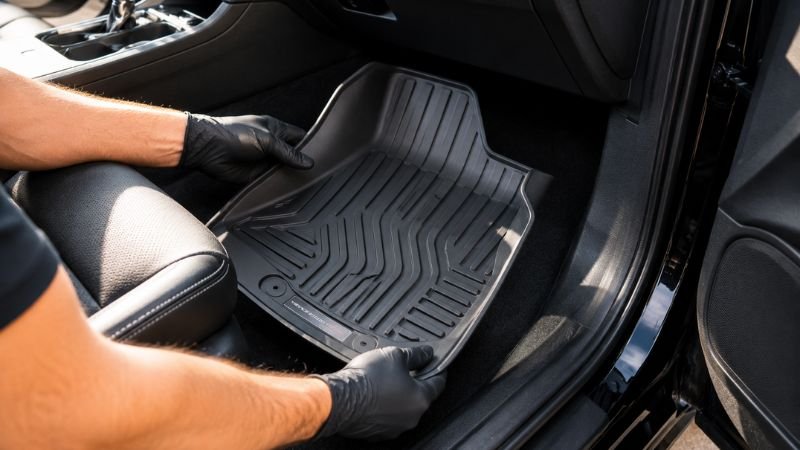
- Use All-Weather Rubber Floor Mats: Rubber mats catch melting snow, mud, and liquid spills before they reach the absorbent factory carpet.
- Keep Charcoal Desiccant Bags Under Seats: Place activated charcoal bags inside your cabin to continuously absorb ambient humidity during rainy seasons.
Final Thoughts
Mastering how to clean mold from car carpet comes down to acting fast, using acidic solutions like vinegar to kill spores at their roots, and ensuring 100% dry conditions afterward. By following this 5-step restoration protocol, you can eliminate health hazards, restore cabin freshness, and protect your vehicle’s resale value effortlessly.